PON Types: GPON, XGS-PON, EPON — architectures and use cases in 2026

Table of contents
Your FTTH connection reaches your home via a single fiber, shared with dozens of neighbors. No active switch in the street, no electronic concentrator in the street cabinet — just glass, light, and a passive optical splitter. This is the principle of PON (Passive Optical Network).
Behind this apparent simplicity lie several mutually incompatible standards: GPON, XGS-PON, EPON, 10G-EPON. Understanding their differences allows you to choose the right OLT, the right SFP module, and the right patch cord when deploying FTTH or installing a network room.
A PON network divides a single fiber into 32 to 128 logical fibers thanks to a passive splitter. The result: an infrastructure cost 3 to 5 times lower than a point-to-point architecture.
PON architecture: OLT, splitter and ONU — the three key components
Before comparing the standards, you need to understand the three invariant pieces of equipment in all PON networks:
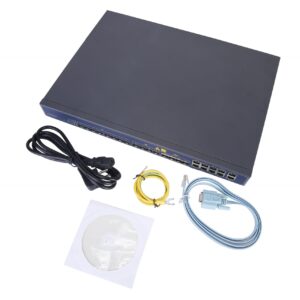
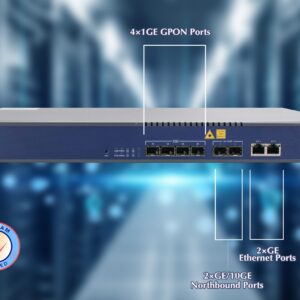
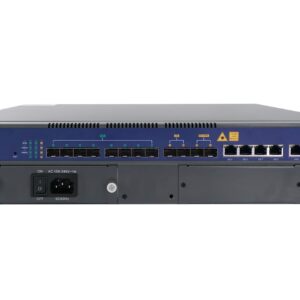
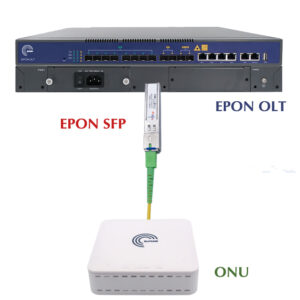
- OLT (Optical Line Terminal): the central equipment installed in the central office or the operator's POP (Point of Presence). It manages communication with all subscribers in its branch, allocates time slots (TDMA in upstream) and encodes the optical signals.
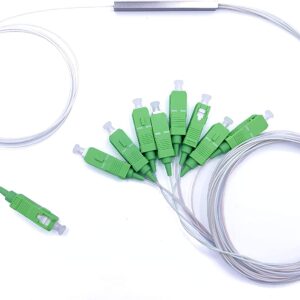
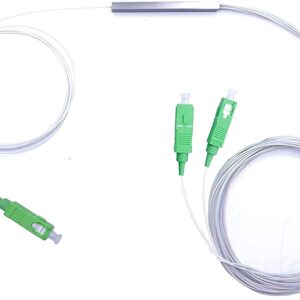
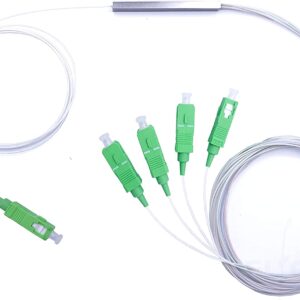
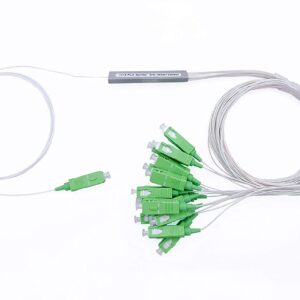
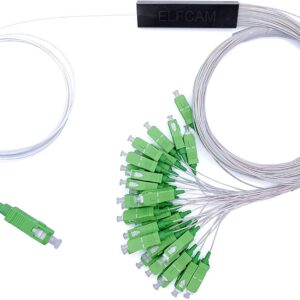
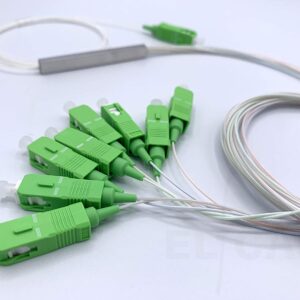
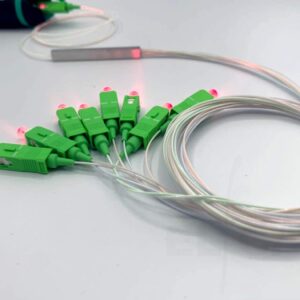
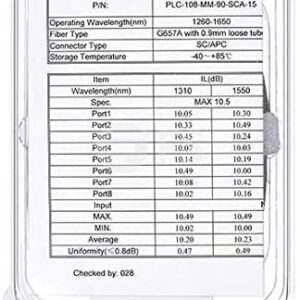
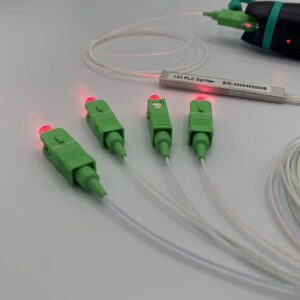
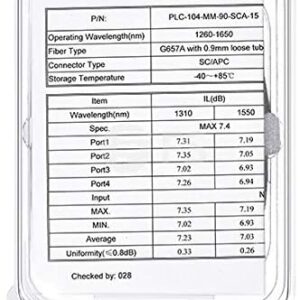
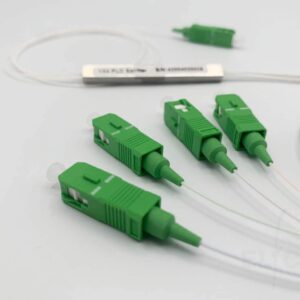
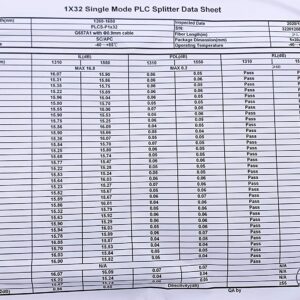
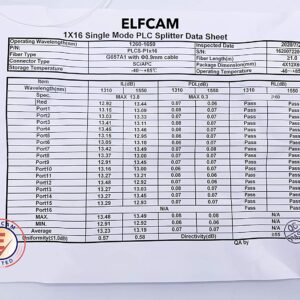
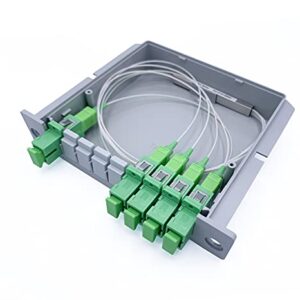
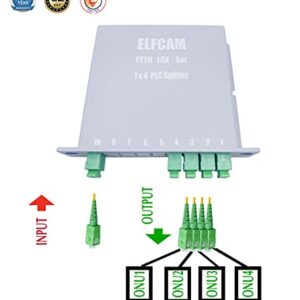
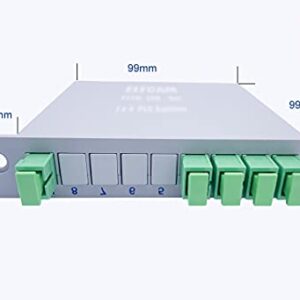
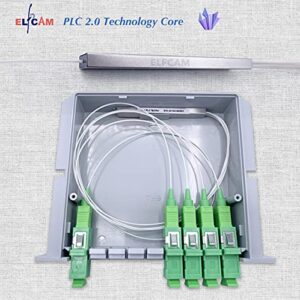
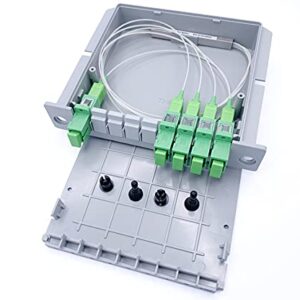
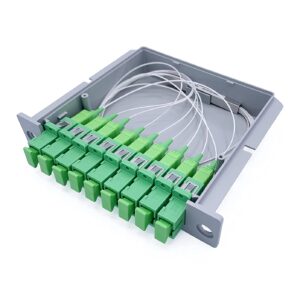
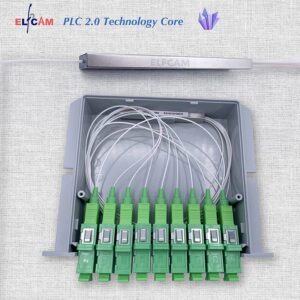
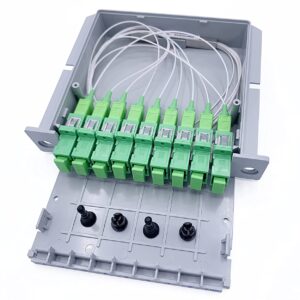
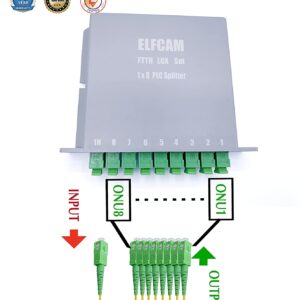
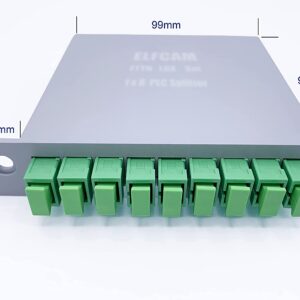
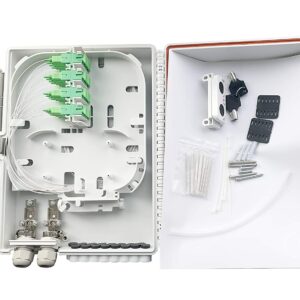
- PLC splitter (Planar Lightwave Circuit): the passive component installed in the street cabinet or the NRO. It divides the optical signal into 2, 4, 8, 16, 32, 64 or 128 paths without any electrical power. It is what enables fiber sharing.
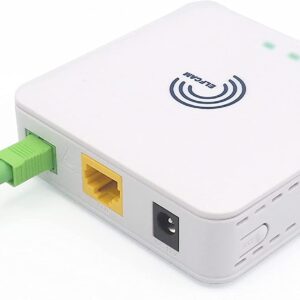
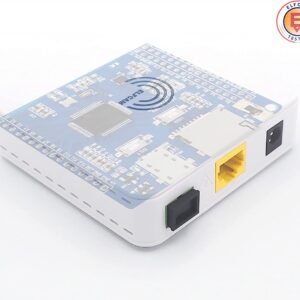
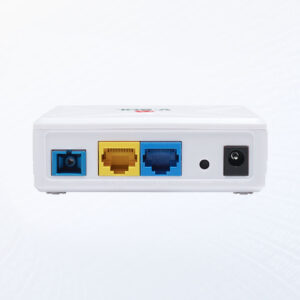
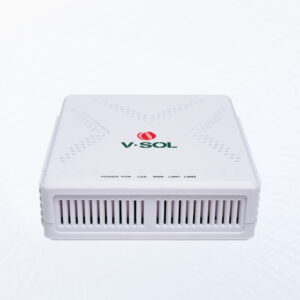
- ONU/ONT (Optical Network Unit / Optical Network Terminal): the equipment on the subscriber side. It converts the optical signal into an Ethernet signal (RJ45). In a residential FTTH deployment, it is often integrated into the internet box. For businesses, it is a dedicated piece of equipment.
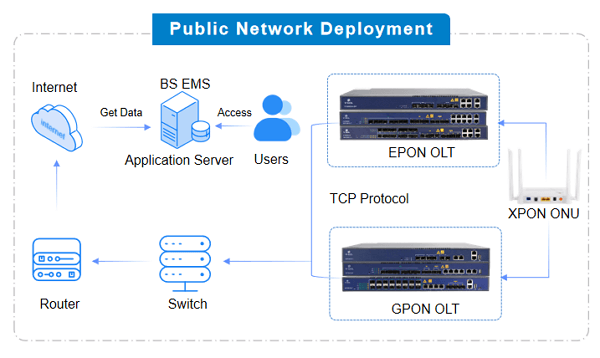
The fiber between the OLT and the subscribers is bidirectional on a single fiber thanks to wavelength multiplexing: the downstream signal (DL) uses a different wavelength from the upstream signal (UL). In GPON, this is 1490 nm for downstream and 1310 nm for upstream.


APON and BPON: the founding standards (1995–2005)
The first PON standard, APON (ATM PON), was born in 1995 under the impetus of a consortium of seven European operators (FSAN). It relied on ATM (Asynchronous Transfer Mode) technology — a 53-byte cell switching protocol used by telecom networks at the time. Bitrate: 155 Mbps symmetric, sharing ratio 1:32.
BPON (Broadband PON), standardized by ITU-T (G.983) in 1998, improved APON by adding WDM (wavelength division multiplexing) for video transport, dynamic bandwidth allocation (DBA), and the OMCI interface between OLT and ONU. The bitrate reached 622 Mbps downstream / 155 Mbps upstream.
These two standards are now obsolete and out of production. Their main legacy is the OMCI (ONT Management and Control Interface) that all successor standards have kept for ONU management.
GPON: the dominant global standard for residential FTTH
GPON (Gigabit Passive Optical Network), standardized by ITU-T under the G.984 standard in 2003–2004, is the technology that equips almost all French FTTH deployments. Orange, SFR and Bouygues Telecom have all chosen GPON for their access network.
Main characteristics:
- Downstream bitrate: 2.488 Gbps (2.5 Gbps) shared among all subscribers in the branch
- Upstream bitrate: 1.244 Gbps (1.25 Gbps) shared
- Wavelengths: 1490 nm downstream / 1310 nm upstream (+ 1550 nm optional for RF video)
- Sharing ratio: up to 1:64 (1:128 optional)
- Maximum distance: 20 km logical, 60 km physical with amplification
- Encapsulation: GEM (GPON Encapsulation Method) — supports Ethernet, ATM and TDM
In France, a GPON FTTH subscriber receives in practice 1 Gbps downstream and 700 Mbps upstream — the rest of the GPON capacity being shared but rarely saturated with ratios of 1:32 or 1:16 in dense areas. The patch cord connecting the PTO to the box must always be SC/APC (green connector, 8° polish) — a specification dictated by the GPON architecture which requires return reflection below −65 dB.
Elfcam GPON equipment
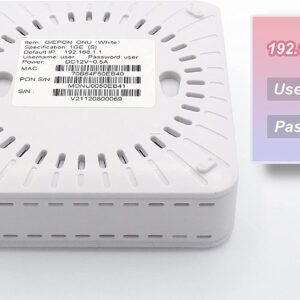
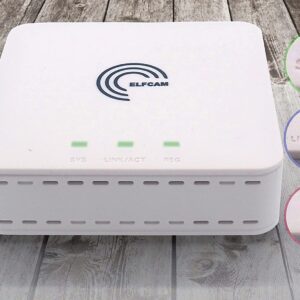
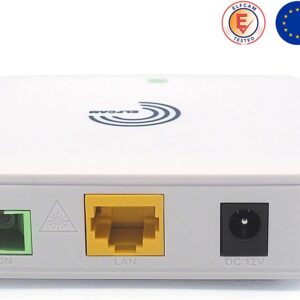
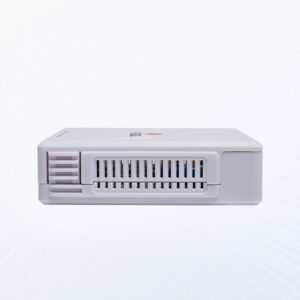
- GPON/EPON 1GE ONU — single-mode SC/APC port, compatible with standard GPON OLTs
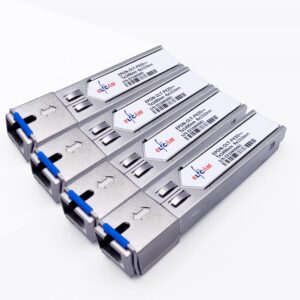
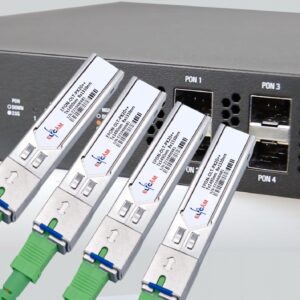
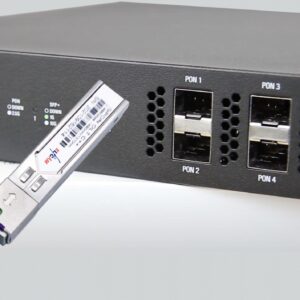
- GPON OLT SFP 1.25G — TX 1490 nm / RX 1310 nm, class PX20++, 20 km
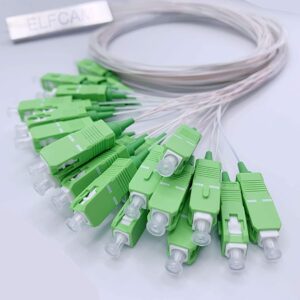
- SC/APC OS2 patch cords — for PTO → box connection on GPON network
EPON and 10G-EPON: the Ethernet path, dominant in Asia
EPON (Ethernet PON), standardized by IEEE under the 802.3ah standard in 2004, took a different path from GPON: instead of GEM, it natively transports Ethernet frames. It is the dominant standard in Asia (Japan, Korea, China) and the United States, but rarely deployed in Europe.
Characteristics:
- Bitrate: 1 Gbps symmetric (downstream and upstream identical)
- Wavelengths: 1490 nm DL / 1310 nm UL (identical to GPON)
- Ratio: 1:16 typical, 1:32 possible
- Protocol: native Ethernet — no additional encapsulation layer
10G-EPON (IEEE 802.3av), standardized in 2009, brings the bitrate to 10 Gbps downstream / 1 Gbps upstream (asymmetric) or 10/10 Gbps (symmetric depending on configuration). It uses 1577 nm for the 10G downstream and keeps 1310 nm for the upstream.


XGS-PON and 10G-PON: symmetric 10 Gbit/s, the future of French FTTH
XGS-PON (10-Gigabit-capable Symmetric Passive Optical Network), standardized by ITU-T under the G.9807.1 standard in 2016, is the ITU's response to 10G-EPON — with a key characteristic: 10 Gbps in both directions (upstream and downstream).
XGS-PON uses different wavelengths from existing GPON: 1577 nm downstream / 1270 nm upstream. This spectral separation allows coexistence on the same fiber — an OLT can simultaneously serve GPON ONUs (1490/1310 nm) and XGS-PON ONUs (1577/1270 nm) on the same passive infrastructure. This is what Orange is deploying with the Livebox 6: the subscriber switches to XGS-PON by changing only the ONU (the box), without touching the cables or the splitter.
- Bitrate: 9.953 Gbps symmetric (10 Gbps effective)
- Ratio: up to 1:128
- Distance: 20 km (identical to GPON)
- Coexistence: compatible with GPON on the same fiber via WDM
- France deployment: Orange (Livebox 6), new Bouygues and SFR deployments in 2025–2026
XGS-PON and SC/APC patch cords
XGS-PON keeps the SC/APC connector on the subscriber side — the same patch cord that connects a GPON box works on XGS-PON. Only the ONU changes. Elfcam SC/APC patch cords (ref. 11, 319, 1366) are compatible with both standards.
NG-PON2 and 50G-PON: the next wave
NG-PON2 (Next-Generation PON 2), standardized by ITU-T (G.989) in 2015, introduces TWDM-PON (Time and Wavelength Division Multiplexed PON) — a combination of time AND wavelength multiplexing. It stacks up to 4 pairs of XGS-PON wavelengths, reaching 40 Gbps downstream / 10 Gbps upstream per strand. Its deployment remains limited to operator backbones and ultra-dense campuses.
50G-PON (ITU-T G.9804), standardized in 2021, targets 50 Gbps downstream / 25 Gbps upstream and meets the needs of data centers and high-density office buildings. The first commercial equipment is appearing in 2025–2026. For residential FTTH deployments, XGS-PON remains the reference standard for at least 10 years.
PON standards comparison table — and how to choose
| Standard | Organization | DL / UL | λ DL / UL | Max ratio | Distance | Main use | France deployment |
|---|---|---|---|---|---|---|---|
| APON | ITU-T G.983 | 155 / 155 Mbps | 1490 / 1310 nm | 1:32 | 20 km | Obsolete | None |
| BPON | ITU-T G.983 | 622 / 155 Mbps | 1490 / 1310 nm | 1:32 | 20 km | Obsolete | None |
| EPON | IEEE 802.3ah | 1 / 1 Gbps | 1490 / 1310 nm | 1:32 | 20 km | FTTH Asia/USA | Marginal |
| GPON | ITU-T G.984 | 2.5 / 1.25 Gbps | 1490 / 1310 nm | 1:128 | 20 km | Global FTTH | Orange, SFR, Bouygues |
| 10G-EPON | IEEE 802.3av | 10 / 1–10 Gbps | 1577 / 1270 nm | 1:32 | 20 km | FTTH Asia | None |
| XG-PON (XG-PON1) | ITU-T G.987 | 10 / 2.5 Gbps | 1577 / 1270 nm | 1:64 | 20 km | FTTH transition | Rare |
| XGS-PON | ITU-T G.9807.1 | 10 / 10 Gbps | 1577 / 1270 nm | 1:128 | 20 km | Next-gen FTTH | Orange Livebox 6 |
| NG-PON2 | ITU-T G.989 | 40 / 10 Gbps | 4× WDM | 1:256 | 40 km | Campus, backbone | Rare |
| 50G-PON | ITU-T G.9804 | 50 / 25 Gbps | TBD | 1:256 | 20 km | Data center, dense | Emerging 2025–2026 |
For a residential FTTH deployment in France in 2026, the choice is between GPON (existing infrastructure, abundant and economical equipment) and XGS-PON (new installations, possible coexistence on existing GPON fiber). For businesses and data centers, XGS-PON or NG-PON2 depending on density and available optical budget.
FAQ — PON types and passive optical networks
1What is the difference between GPON and XGS-PON?
2Why must my patch cord be SC/APC and not SC/UPC on an FTTH network?
3What is the difference between ONU and ONT?
4Does a PON splitter consume electricity?
5Is the Freebox on a PON network?
6Can GPON and XGS-PON ONUs be mixed on the same OLT?
7How to measure the quality of a PON link in the field?
- PON optical power meter (e.g. ref. 22032): measures the power received at 1490 nm and 1310 nm simultaneously, compatible with GPON/EPON/XGS-PON. Quick to check that an ONU receives a signal within the acceptable range (typically −8 to −28 dBm).
- XGS-PON Mini-OTDR (e.g. ref. 26909): full link trace, locates each splice, connector and splitter. Essential for diagnosing long links or post-installation faults.