Technical Guide

GPON vs EPON: complete comparison across 5 criteria — bandwidth, QoS, OAM, cost and deployment
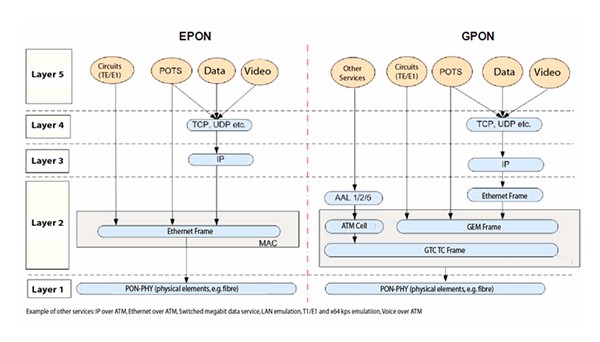
GPON vs EPON comparison — passive optical network FTTH architecture, OLT ONU differences
GPON and EPON share the same point-to-multipoint PON architecture, but differ radically in protocol, bandwidth and management.

Contents

  1. Context — FTTH and PON standards
  2. Criterion 1 — Bandwidth and capacity
  3. Criterion 2 — Split ratio
  4. Criterion 3 — QoS and multi-services
  5. Criterion 4 — OAM and network management
  6. Criterion 5 — Total deployment cost
  7. Which standard to choose?
  8. Frequently asked questions

When an operator or integrator plans an FTTH deployment, the choice between GPON and EPON is often the first structural decision. These two technologies share the same physical architecture — a central OLT, a passive splitter, ONUs at the subscribers' premises — but diverge deeply on the protocol, bandwidth, quality-of-service management and equipment cost. This guide compares the two standards across 5 operational criteria to help you make the right choice for your context.

GPON and EPON are not interchangeable: a GPON ONU cannot connect to an EPON OLT and vice versa. The choice of standard commits the entire active equipment fleet.

Context — FTTH and the two families of PON standards

Passive optical networks (PON) were developed in parallel by two distinct standardization bodies, which explains the existence of two incompatible families:

  • GPON (Gigabit Passive Optical Network) — standardized by the ITU-T (G.984), the international telecommunications organization. Dominant in Europe, North America and the Middle East. The reference standard of French operators (Orange, SFR, Bouygues, Free).
  • EPON (Ethernet Passive Optical Network) — standardized by the IEEE (802.3ah), the organization specialized in Ethernet networks. Dominant in Asia (China, Japan, Korea) and in enterprise deployments.

Both standards use the same optical wavelengths (1490 nm downstream, 1310 nm upstream) and the same passive physical infrastructure (splitters, OS2 cables). The difference lies entirely in the active protocol layer.
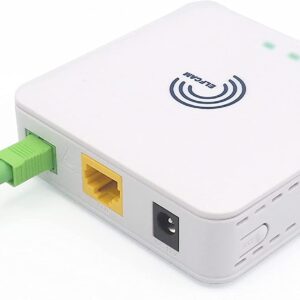
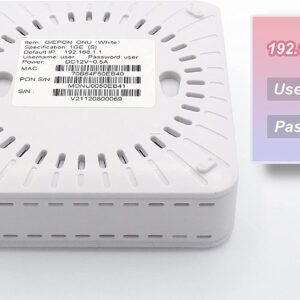
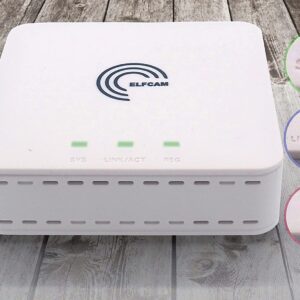
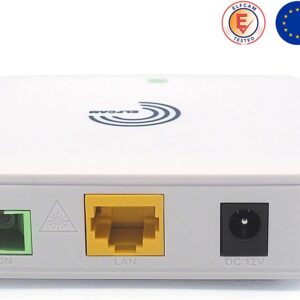
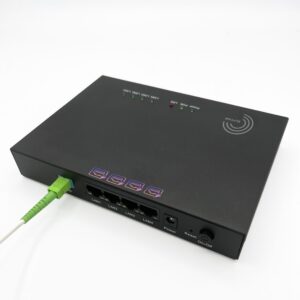
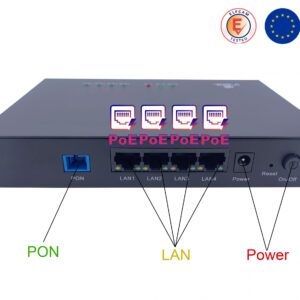
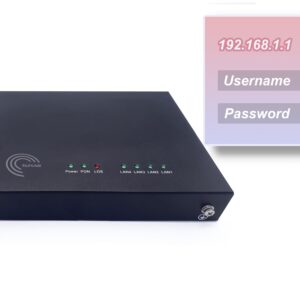
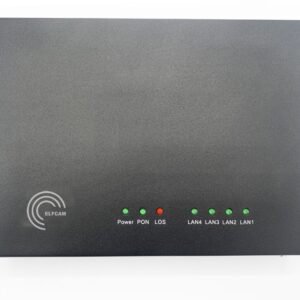
boitier onuElfcam – 1GE ONU pour GPON/EPON OLT, avec Port Fibre Optique SC/APC Monomode (Ref:6404)Elfcam – 1GE ONU pour GPON/EPON OLT, avec Port Fibre Optique SC/APC Monomode (Ref:6404)Elfcam – 1GE ONU pour GPON/EPON OLT, avec Port Fibre Optique SC/APC Monomode (Ref:6404)Elfcam – 1GE ONU pour GPON/EPON OLT, avec Port Fibre Optique SC/APC Monomode (Ref:6404)
Elfcam - 1GE ONU pour GPON/EPON OLT, avec Port Fibre Optique SC/APC Monomode (Ref:6404)
ELFCAM · Réf 6404
Le prix initial était : 59,99 €.Le prix actuel est : 49,99 €.
12 ventes⚡ Livraison Express
★★★★★ (4)
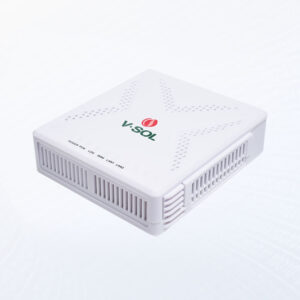
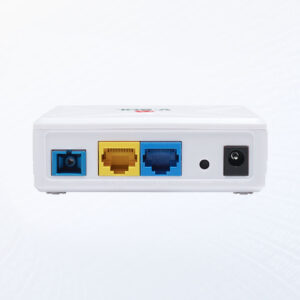
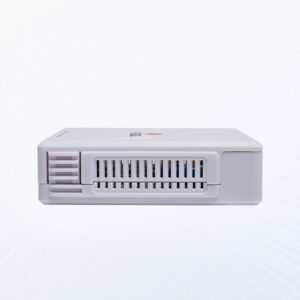
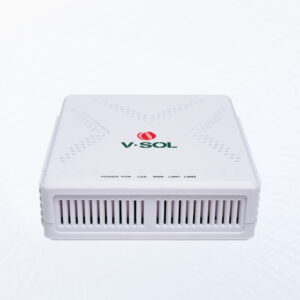
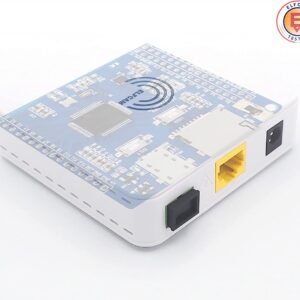
V.SOL - ONU pour GPON/EPON OLT, avec Port Fibre Optique SC/UPC Monomode (1GE + 2,5GbE) (Ref:6965)V.SOL – ONU pour GPON/EPON OLT, avec Port Fibre Optique SC/UPC Monomode (1GE + 2,5GbE) (Ref:6965)V.SOL – ONU pour GPON/EPON OLT, avec Port Fibre Optique SC/UPC Monomode (1GE + 2,5GbE) (Ref:6965)V.SOL – ONU pour GPON/EPON OLT, avec Port Fibre Optique SC/UPC Monomode (1GE + 2,5GbE) (Ref:6965)
V.SOL - ONU pour GPON/EPON OLT, avec Port Fibre Optique SC/UPC Monomode (1GE + 2,5GbE) (Ref:6965)
ELFCAM · Réf 6965
Le prix initial était : 69,99 €.Le prix actuel est : 62,99 €.
3 ventes⚡ Livraison Express
★★★★★ (2)

Criterion 1 — Transmission bandwidth and capacity

This is the most frequently cited criterion, and the one where GPON has the clearest advantage.

GPON: Supports several levels of asymmetric bandwidth:

  • Downstream: 2.488 Gbps (standard mode) or 1.244 Gbps (economy mode)
  • Upstream: 1.244 Gbps or 622 Mbps depending on the selected level
  • The asymmetry is configurable — useful for residential FTTH services where downstream traffic (streaming, downloading) far exceeds upstream
  • NRZ encoding — more spectrally efficient than EPON's 8B/10B

EPON: Fixed symmetric bandwidth:

  • Downstream and upstream: 1.25 Gbps nominal, i.e. 1 Gbps effective after the 8B/10B encoding overhead (20% efficiency loss)
  • 10G-EPON (IEEE 802.3av) reaches 10 Gbps but requires next-generation equipment
  • Symmetric bandwidth — an advantage for professional uses (intensive upload, remote backup)
StandardDownstream bandwidthUpstream bandwidthEncoding efficiencyVerdict
GPON2.488 Gbps1.244 GbpsNRZ (~93%)✓ Best
EPON1.25 Gbps (→ 1 Gbps effective)1.25 Gbps (→ 1 Gbps effective)8B/10B (80%)
10G-EPON10 Gbps1 or 10 Gbps64B/66B (~97%)Next generation

Bandwidth verdict: GPON is superior. The GPON downstream bandwidth (2.5 Gbps) is twice that of EPON (1 Gbps effective). For residential FTTH or triple-play deployments, this is a decisive advantage.

Criterion 2 — Split ratio and distance

The split ratio determines how many subscribers can share a single OLT port — a key criterion for infrastructure cost.

GPON: Officially supports the 1:32, 1:64 and 1:128 ratios. In practice, operator deployments use 1:32 or 1:64 to maintain satisfactory per-subscriber bandwidth. Maximum supported distance:

  • 1:16 → max range 20 km
  • 1:32 → max range 10 km (optical budget reduced by the splitter)
  • 1:64 → practical range reduced to 5–7 km depending on the optical module class

EPON: Standard ratio 1:16 to 1:32. Can theoretically reach 1:64 or 1:128, but the splitter insertion loss (15–18 dB for a 1:32) limits the distance and requires more powerful optical modules — and therefore more expensive ones. Most EPON deployments stick with 1:16 to guarantee performance.

Ratio verdict: tie — both standards support similar ratios in practice, but GPON offers better performance at high ratios thanks to its more generous optical budget.

Criterion 3 — QoS and multi-service support

Quality of service (QoS) is one of the areas where GPON most clearly outperforms EPON, especially for triple-play deployments.

GPON — native and granular QoS:

  • T-CONT (Transmission Containers) — 5 T-CONT types allow bandwidth allocation with strict guarantees per service and per subscriber (fixed, assured, non-assured, best-effort)
  • DBA (Dynamic Bandwidth Allocation) — real-time dynamic adjustment according to each subscriber's actual load
  • Native multi-service support: Ethernet, TDM (voice), ATM and CATV (cable TV via WDM at 1550 nm) in a single GEM stream
  • Contractually guaranteed — operators can commit to precise per-subscriber SLAs

EPON — added QoS, not native:

  • EPON has no inherent QoS capability at the MAC protocol level
  • Operators work around this gap by using VLAN tags (802.1Q) and DiffServ mechanisms — but this approach is more complex to deploy and maintain
  • Native Ethernet support only — TDM and CATV require additional gateways
  • Better suited to purely IP networks where QoS is managed at higher layers

QoS verdict: GPON clearly superior. For any deployment including VoIP, TV or guaranteed SLAs, GPON is the only viable choice without over-engineering.

Criterion 4 — OAM and network management

OAM (Operations, Administration and Maintenance) determines the ease of monitoring, diagnosing and maintaining the network in operation.

GPON — complete and standardized OAM: Three distinct OAM channels are built into the protocol:

  • PLOAM (Physical Layer OAM) — manages data encryption, ONU state detection, error monitoring and remote activation/deactivation
  • OMCI (ONU Management and Control Interface) — standardized protocol (ITU-T G.988) for remote ONU configuration: IP, VoIP, VLAN, QoS parameters. Enables zero-touch management of an ONU fleet.
  • Embedded OAM — loopback, link monitoring, real-time error counters

EPON — minimal and proprietary OAM:

  • The IEEE 802.3ah standard defines an optional and limited OAM set: remote fault indication, loopback, link monitoring
  • No standardized equivalent to OMCI — ONU management relies on proprietary protocols (TR-069, SNMP) that vary by manufacturer
  • OAM interoperability between OLT and ONUs of different brands is less guaranteed than in GPON

OAM verdict: GPON superior. GPON's standardized OMCI enables zero-touch management and multi-vendor interoperability that EPON cannot match natively.

Criterion 5 — Total deployment cost

This is EPON's main advantage — and the main reason for its persistence in the market despite performance inferior to GPON.

Active equipment cost:

  • GPON OLT — GPON chipsets historically use FPGAs (Field Programmable Gate Array), more expensive to produce than ASICs. The cost per OLT port is higher than in EPON.
  • EPON OLT — based on standardized MAC layer ASICs, cheaper to manufacture. Price per OLT port is 15 to 30% lower depending on the range.
  • Optical modules — EPON (1.25G) transceivers are cheaper than GPON (2.5G) modules because they are produced in larger volumes in Asia.
  • ONUs/ONTs — similar prices for entry-level models (1GE), slight difference in favor of EPON on multi-port models.

Passive infrastructure cost: identical — OS2 cables, splitters, splice boxes and pulling chambers are strictly the same for GPON and EPON.

Operational cost: In the medium term, GPON's better OAM management (zero-touch OMCI) reduces field intervention costs, partially offsetting the initial equipment premium.

Cost verdict: EPON cheaper at installation, but GPON more economical over the full life cycle thanks to its OAM capabilities reducing interventions.

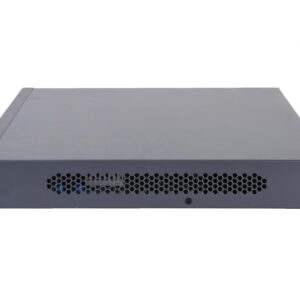
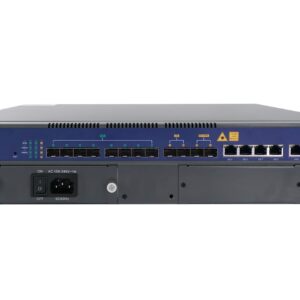
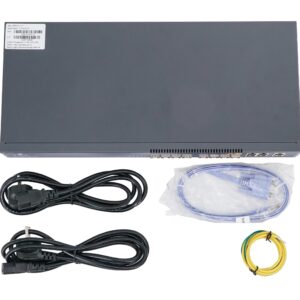
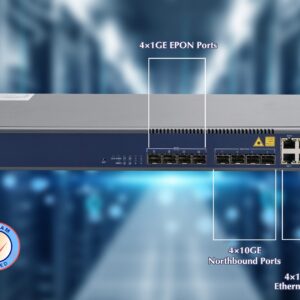
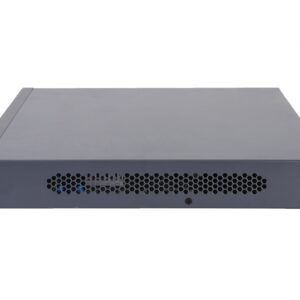
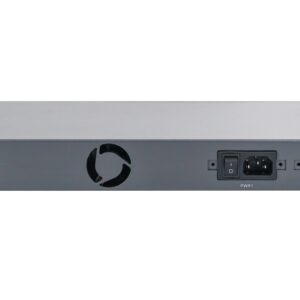
GPON OLT avec 4/8/16 Ports PON, Mettre à Jour Automatique, Gestion Web EMS (4 Ports PON) (Ref:6652)GPON OLT avec 4/8/16 Ports PON, Mettre à Jour Automatique, Gestion Web EMS (16 Ports PON) (Ref:6692)GPON OLT avec 4/8/16 Ports PON, Mettre à Jour Automatique, Gestion Web EMS (16 Ports PON) (Ref:6692)GPON OLT avec 4/8/16 Ports PON, Mettre à Jour Automatique, Gestion Web EMS (16 Ports PON) (Ref:6692)GPON OLT avec 4/8/16 Ports PON, Mettre à Jour Automatique, Gestion Web EMS (16 Ports PON) (Ref:6692)GPON OLT avec 4/8/16 Ports PON, Mettre à Jour Automatique, Gestion Web EMS (16 Ports PON) (Ref:6692)GPON OLT avec 4/8/16 Ports PON, Mettre à Jour Automatique, Gestion Web EMS (16 Ports PON) (Ref:6692)
GPON OLT avec 4/8/16 Ports PON, Mettre à Jour Automatique, Gestion Web EMS (4 Ports PON) (Ref:6652)
ELFCAM · Réf 6652
Le prix initial était : 1499,99 €.Le prix actuel est : 1299,99 €.
⚡ Livraison Express
★★★★★ (2)
GPON OLT avec 4/8/16 Ports PON, Mettre à Jour Automatique, Gestion Web EMS (8 Ports PON) (Ref:6686)GPON OLT avec 4/8/16 Ports PON, Mettre à Jour Automatique, Gestion Web EMS (16 Ports PON) (Ref:6692)GPON OLT avec 4/8/16 Ports PON, Mettre à Jour Automatique, Gestion Web EMS (16 Ports PON) (Ref:6692)GPON OLT avec 4/8/16 Ports PON, Mettre à Jour Automatique, Gestion Web EMS (16 Ports PON) (Ref:6692)GPON OLT avec 4/8/16 Ports PON, Mettre à Jour Automatique, Gestion Web EMS (16 Ports PON) (Ref:6692)GPON OLT avec 4/8/16 Ports PON, Mettre à Jour Automatique, Gestion Web EMS (16 Ports PON) (Ref:6692)GPON OLT avec 4/8/16 Ports PON, Mettre à Jour Automatique, Gestion Web EMS (16 Ports PON) (Ref:6692)
GPON OLT avec 4/8/16 Ports PON, Mettre à Jour Automatique, Gestion Web EMS (8 Ports PON) (Ref:6686)
ELFCAM · Réf 6686
Le prix initial était : 799,99 €.Le prix actuel est : 699,99 €.
2 ventes⚡ Livraison Express
★★★★★ (2)
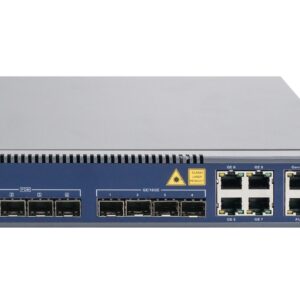
EPON OLT avec 4/8/16 Ports PON, Mettre à Jour Automatique, Gestion Web EMS (4 Ports PON) (Ref:6665)EPON OLT avec 4/8/16 Ports PON, Mettre à Jour Automatique, Gestion Web EMS (16 Ports PON) (Ref:6695)EPON OLT avec 4/8/16 Ports PON, Mettre à Jour Automatique, Gestion Web EMS (16 Ports PON) (Ref:6695)EPON OLT avec 4/8/16 Ports PON, Mettre à Jour Automatique, Gestion Web EMS (16 Ports PON) (Ref:6695)EPON OLT avec 4/8/16 Ports PON, Mettre à Jour Automatique, Gestion Web EMS (16 Ports PON) (Ref:6695)EPON OLT avec 4/8/16 Ports PON, Mettre à Jour Automatique, Gestion Web EMS (16 Ports PON) (Ref:6695)EPON OLT avec 4/8/16 Ports PON, Mettre à Jour Automatique, Gestion Web EMS (16 Ports PON) (Ref:6695)
EPON OLT avec 4/8/16 Ports PON, Mettre à Jour Automatique, Gestion Web EMS (4 Ports PON) (Ref:6665)
ELFCAM · Réf 6665
Le prix initial était : 1699,99 €.Le prix actuel est : 1369,99 €.
⚡ Livraison Express
★★★★½ (4)
EPON OLT avec 4/8/16 Ports PON, Mettre à Jour Automatique, Gestion Web EMS (8 Ports PON) (Ref:6693)EPON OLT avec 4/8/16 Ports PON, Mettre à Jour Automatique, Gestion Web EMS (16 Ports PON) (Ref:6695)EPON OLT avec 4/8/16 Ports PON, Mettre à Jour Automatique, Gestion Web EMS (16 Ports PON) (Ref:6695)EPON OLT avec 4/8/16 Ports PON, Mettre à Jour Automatique, Gestion Web EMS (16 Ports PON) (Ref:6695)EPON OLT avec 4/8/16 Ports PON, Mettre à Jour Automatique, Gestion Web EMS (16 Ports PON) (Ref:6695)EPON OLT avec 4/8/16 Ports PON, Mettre à Jour Automatique, Gestion Web EMS (16 Ports PON) (Ref:6695)EPON OLT avec 4/8/16 Ports PON, Mettre à Jour Automatique, Gestion Web EMS (16 Ports PON) (Ref:6695)
EPON OLT avec 4/8/16 Ports PON, Mettre à Jour Automatique, Gestion Web EMS (8 Ports PON) (Ref:6693)
ELFCAM · Réf 6693
Le prix initial était : 2199,99 €.Le prix actuel est : 1819,99 €.
⚡ Livraison Express
★★★★½ (3)

Which standard to choose for your deployment?

The decision depends on three main factors:

  • Choose GPON if: you are deploying in France or Europe (existing GPON infrastructure), you need triple-play (voice + data + TV), you want guaranteed per-subscriber SLAs, or you manage a large ONU fleet to administer remotely.
  • Choose EPON if: you are connecting to an existing EPON infrastructure (Asia, some enterprise operators), your network is purely IP without TDM/CATV services, or your initial budget is the main constraint.
  • Choose xPON if: you are deploying in a mixed GPON/EPON environment, or if you anticipate a future migration — an xPON ONU works with both types of OLT without replacement. Learn more about xPON →

Quick summary

In France, GPON is the de facto standard for FTTH deployments. If you are connecting equipment to a French operator infrastructure (Orange, SFR, Bouygues, Free), you are on GPON. EPON remains relevant for independent enterprise networks and installations in Asia.
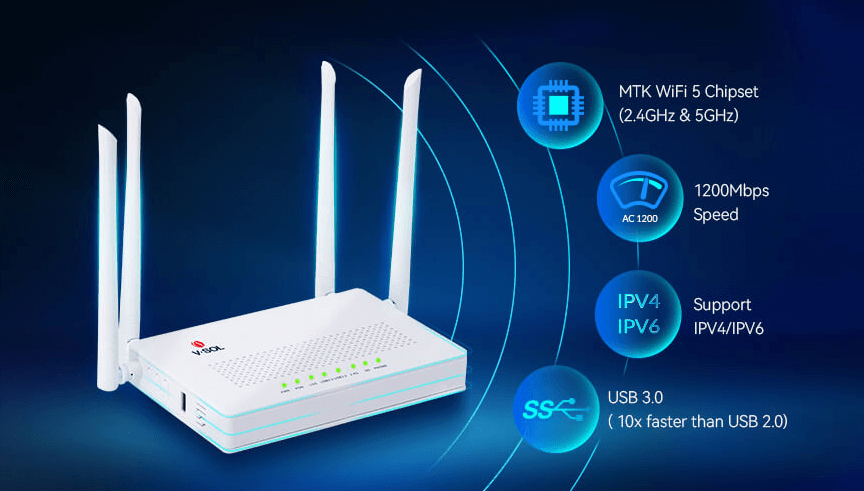
xPON ONU compatible with GPON and EPON — universal solution for mixed networks
Elfcam's xPON ONUs automatically detect the network type (GPON or EPON) and adapt to it — ideal for deployments in mixed environments.
GPON OLT avec 4/8/16 Ports PON, Mettre à Jour Automatique, Gestion Web EMS (16 Ports PON) (Ref:6692)GPON OLT avec 4/8/16 Ports PON, Mettre à Jour Automatique, Gestion Web EMS (16 Ports PON) (Ref:6692)GPON OLT avec 4/8/16 Ports PON, Mettre à Jour Automatique, Gestion Web EMS (16 Ports PON) (Ref:6692)GPON OLT avec 4/8/16 Ports PON, Mettre à Jour Automatique, Gestion Web EMS (16 Ports PON) (Ref:6692)GPON OLT avec 4/8/16 Ports PON, Mettre à Jour Automatique, Gestion Web EMS (16 Ports PON) (Ref:6692)GPON OLT avec 4/8/16 Ports PON, Mettre à Jour Automatique, Gestion Web EMS (16 Ports PON) (Ref:6692)GPON OLT avec 4/8/16 Ports PON, Mettre à Jour Automatique, Gestion Web EMS (16 Ports PON) (Ref:6692)
GPON OLT avec 4/8/16 Ports PON, Mettre à Jour Automatique, Gestion Web EMS (16 Ports PON) (Ref:6692)
ELFCAM · Réf 6692
Le prix initial était : 1799,99 €.Le prix actuel est : 1699,99 €.
⚡ Livraison Express
★★★★½ (3)
EPON OLT avec 4/8/16 Ports PON, Mettre à Jour Automatique, Gestion Web EMS (16 Ports PON) (Ref:6695)EPON OLT avec 4/8/16 Ports PON, Mettre à Jour Automatique, Gestion Web EMS (16 Ports PON) (Ref:6695)EPON OLT avec 4/8/16 Ports PON, Mettre à Jour Automatique, Gestion Web EMS (16 Ports PON) (Ref:6695)EPON OLT avec 4/8/16 Ports PON, Mettre à Jour Automatique, Gestion Web EMS (16 Ports PON) (Ref:6695)EPON OLT avec 4/8/16 Ports PON, Mettre à Jour Automatique, Gestion Web EMS (16 Ports PON) (Ref:6695)EPON OLT avec 4/8/16 Ports PON, Mettre à Jour Automatique, Gestion Web EMS (16 Ports PON) (Ref:6695)EPON OLT avec 4/8/16 Ports PON, Mettre à Jour Automatique, Gestion Web EMS (16 Ports PON) (Ref:6695)
EPON OLT avec 4/8/16 Ports PON, Mettre à Jour Automatique, Gestion Web EMS (16 Ports PON) (Ref:6695)
ELFCAM · Réf 6695
Le prix initial était : 2549,99 €.Le prix actuel est : 2219,99 €.
⚡ Livraison Express
★★★★½ (3)
V.SOL - ONU pour GPON/EPON OLT, avec Port Fibre Optique SC/UPC Monomode (1GE + 2,5GbE) (Ref:6965)V.SOL – ONU pour GPON/EPON OLT, avec Port Fibre Optique SC/UPC Monomode (1GE + 2,5GbE) (Ref:6965)V.SOL – ONU pour GPON/EPON OLT, avec Port Fibre Optique SC/UPC Monomode (1GE + 2,5GbE) (Ref:6965)V.SOL – ONU pour GPON/EPON OLT, avec Port Fibre Optique SC/UPC Monomode (1GE + 2,5GbE) (Ref:6965)
V.SOL - ONU pour GPON/EPON OLT, avec Port Fibre Optique SC/UPC Monomode (1GE + 2,5GbE) (Ref:6965)
ELFCAM · Réf 6965
Le prix initial était : 69,99 €.Le prix actuel est : 62,99 €.
3 ventes⚡ Livraison Express
★★★★★ (2)
V-SOL 1GE+3FE POE XPON ONU (Ref:7025)V-SOL 1GE+3FE POE XPON ONU (Ref:7025)V-SOL 1GE+3FE POE XPON ONU (Ref:7025)V-SOL 1GE+3FE POE XPON ONU (Ref:7025)
V-SOL 1GE+3FE POE XPON ONU (Ref:7025)
ELFCAM · Réf 7025
99,99 
1 ventes⚡ Livraison Express
★★★½☆ (3)

Frequently asked questions — GPON vs EPON

1Can GPON and EPON ONUs be mixed on the same network?
No. A GPON ONU can only connect to a GPON OLT, and an EPON ONU only to an EPON OLT. The two protocols are fundamentally incompatible at the MAC level. Only xPON ONUs (dual-mode) can work with both types of OLT, automatically detecting the standard used.
2Does 10G-EPON replace GPON in terms of performance?
10G-EPON (IEEE 802.3av) offers up to 10 Gbps downstream, surpassing standard GPON (2.5 Gbps). However, it remains behind on native QoS and standardized OAM. The next-generation GPON equivalent is XGS-PON (ITU-T G.9807), which also reaches 10 Gbps symmetric while retaining GPON's T-CONT and OMCI.
3What is the maximum distance of a PON network (GPON or EPON)?
The maximum logical distance between the OLT and the farthest ONU is 20 km for GPON (with a 1:16 split ratio). In practice, FTTH deployments are sized for 5–10 km. The actual physical distance depends on the optical budget available after splitter losses.
4Why did French operators choose GPON rather than EPON?
During the first FTTH deployments in France (2007–2010), operators favored GPON for three reasons: higher downstream bandwidth (2.5 Gbps vs 1 Gbps), native triple-play support (TDM voice, CATV TV, data) and granular QoS for differentiated offers. The ITU-T (the GPON body) also had a strong presence in European telecommunications.
5Does GPON's OMCI work with all ONU manufacturers?
In theory, OMCI is standardized by the ITU-T G.988 and should be interoperable between manufacturers. In practice, some operators use proprietary extensions that limit interoperability. Elfcam/V-SOL ONUs are compatible with the OLTs of the major brands (Huawei, ZTE, Nokia, Fiberhome) for basic OMCI functions.
6What is the recommended split ratio for a residential FTTH deployment?
In GPON, French operators generally use a 1:32 or 1:64 ratio. A 1:64 ratio with a GPON bandwidth of 2.5 Gbps gives ~39 Mbps theoretical per subscriber downstream — largely sufficient for residential fiber offers. In EPON, 1:16 to 1:32 is more common to maintain an acceptable per-subscriber bandwidth.
7Can a GPON ONU work with any French operator's box?
Technically yes, if the ONU is compatible with the operator's OLT. In practice, French ISPs use proprietary provisioning procedures (serial number, LOID, OMCI password) to control the equipment authorized on their network. Elfcam ONUs are designed for compatibility with the OLTs of the main French operators.
8Where can I find GPON/EPON OLTs and ONUs for an infrastructure project?
Elfcam offers a complete range of GPON OLTs with 4/8/16 ports, EPON OLTs with 4/8/16 ports and ONUs compatible with GPON, EPON and xPON. Volume discounts available for integrators and operators. Delivery in 24–48 h in mainland France.
E

Elfcam Technical Team

Experts in fiber optic infrastructure and networks since 2018. More than 40,000 installations supported in France and Europe. Specialists in PON technologies for residential FTTH and operator deployments.

EN / USD United States
Select the country/region, the language, and the currency in which you want to shop.
Livrer en
United States
Sélectionnez votre adresse de livraison pour estimer les frais et le délai d'expédition.
Panier
Mon Panier
Chargement...