PON — réseau optique passif : introduction, types et applications

Sommaire
Le PON (Passive Optical Network) est l'architecture de réseau fibre optique sur laquelle repose l'ensemble du déploiement FTTH mondial. Son principe — distribuer le signal d'un point central vers de nombreux abonnés via des diviseurs entièrement passifs — a révolutionné l'économie des réseaux d'accès. Ce guide introductif présente le fonctionnement du PON, son évolution depuis l'APON jusqu'au XGS-PON 10G, et les critères pour choisir la bonne norme selon votre projet.
Qu'est-ce que le PON ?
Un réseau optique passif est un réseau de télécommunication en fibre optique qui relie un équipement central (l'OLT) à de multiples équipements abonnés (les ONU) sans aucun composant alimenté électriquement dans le chemin de transmission. La distribution du signal se fait via des splitteurs optiques passifs — des composants purement mécaniques qui divisent physiquement le faisceau lumineux.
L'adjectif « passif » est la propriété clé du PON : entre le central de l'opérateur et le logement de l'abonné, il n'y a ni switch, ni amplificateur, ni aucun équipement nécessitant une alimentation électrique ou une maintenance active. Seules des fibres de verre et des diviseurs optiques occupent ce segment — avec une durée de vie typique de 25 à 30 ans sans intervention.
La topologie PON est dite point à multipoint (P2MP) : une seule fibre depuis l'OLT se divise progressivement via des splitteurs en cascade pour atteindre chaque abonné individuellement. C'est l'opposé d'un réseau point à point (P2P) où chaque abonné nécessiterait sa propre fibre dédiée jusqu'au central.
Un déploiement PON permet de desservir 64 abonnés avec une seule fibre de transport au lieu de 64 — soit une réduction de 98 % de la fibre nécessaire entre le central et le premier nœud de distribution.
PON vs AON : réseau passif contre réseau actif
L'alternative au PON est l'AON (Active Optical Network) — un réseau point à point où chaque abonné dispose d'une fibre dédiée et d'un switch actif alimenté à chaque nœud de distribution. Voici les différences fondamentales :
| Critère | PON (passif) | AON (actif) |
|---|---|---|
| Infrastructure | Fibres + splitteurs passifs | Fibres + switches actifs |
| Équipements en réseau | Aucun (passif) | Switches / répéteurs alimentés |
| Coût de déploiement | Faible (fibre mutualisée) | Élevé (fibre dédiée × abonnés) |
| Coût de maintenance | Très faible (pas d'actif en terrain) | Élevé (équipements à maintenir) |
| Bande passante par abonné | Partagée (TDMA) | Dédiée (P2P) |
| Distance max. | 20–80 km selon norme | Illimitée (avec amplificateurs) |
| Sécurité | Chiffrement AES requis | Isolation physique naturelle |
| Usage typique | FTTH résidentiel, campus | Datacenter, liaisons critiques |
En pratique, le PON domine les déploiements FTTH résidentiels et les réseaux de campus pour ses avantages économiques. L'AON est réservé aux liaisons critiques nécessitant une bande passante dédiée garantie — liaisons datacenter à datacenter, infrastructures industrielles ou militaires.
Les composants d'un réseau PON
Un réseau PON standard comprend trois catégories d'équipements :
L'OLT (Optical Line Terminal) — seul équipement actif côté opérateur. Situé dans le NRO (Nœud de Raccordement Optique) ou en salle serveur, il gère l'ensemble des transmissions : synchronisation TDMA, allocation de bande passante (DBA), authentification des ONU et routage des services (Internet, VoIP, IPTV). Un OLT de 16 ports PON peut desservir jusqu'à 1 024 abonnés simultanément.
Les splitteurs optiques passifs (PLC) — cœur de l'architecture PON. Ces diviseurs à base de technologie planaire (Planar Lightwave Circuit) divisent le signal optique en N flux identiques sans conversion électrique. Les configurations les plus courantes : 1×4, 1×8, 1×16, 1×32, 1×64. Deux niveaux de splitters en cascade permettent d'atteindre des ratios de 1:128 (ex. 1×8 + 1×16). Leur durée de vie est illimitée — aucune alimentation, aucune usure.
L'ONU / ONT (Optical Network Unit / Terminal) — équipement actif côté abonné. Il reçoit le signal optique de la fibre via son port SC/APC, le décode et le distribue en Ethernet, WiFi, téléphonie ou signal CATV selon sa configuration. C'est le seul équipement actif que l'abonné (ou l'installateur) a à gérer en terrain.
-
Promo !
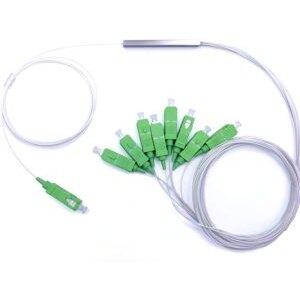
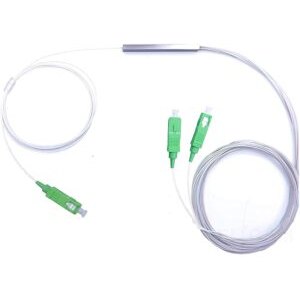
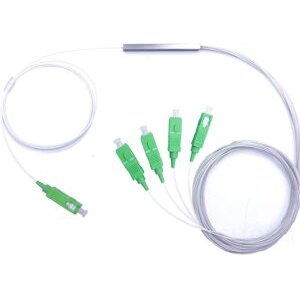
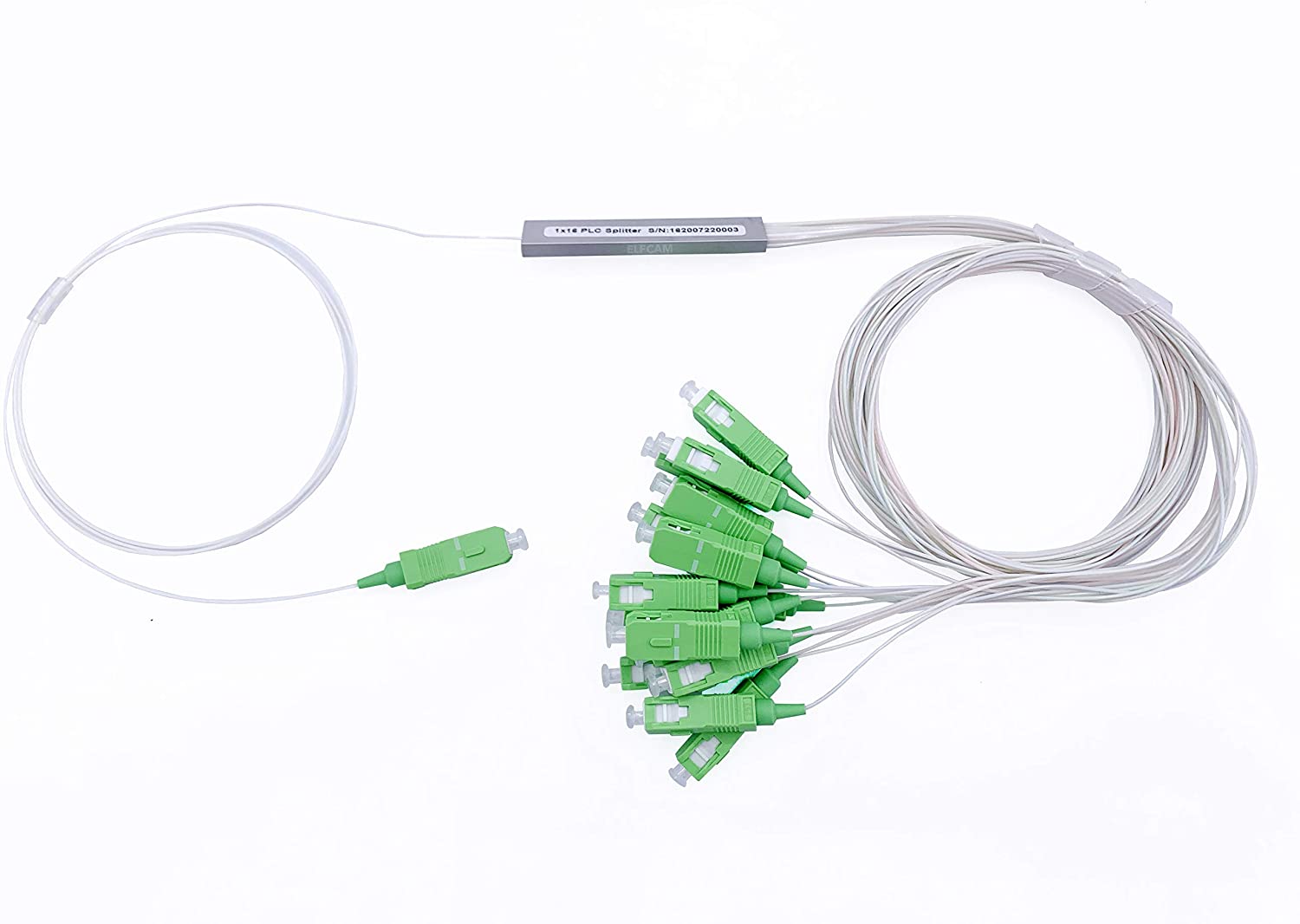
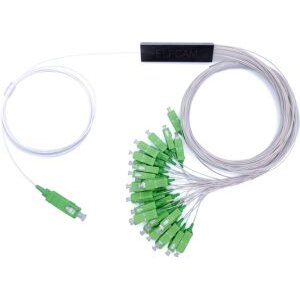
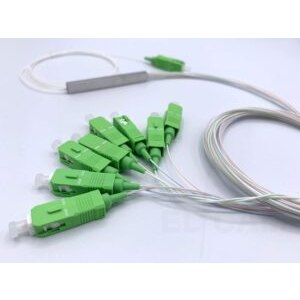
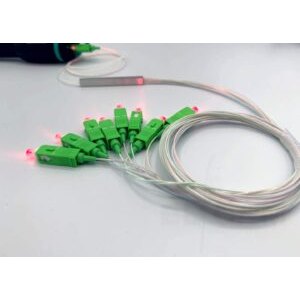
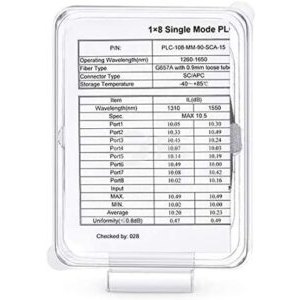
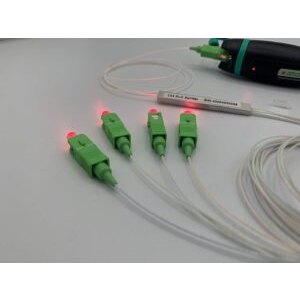
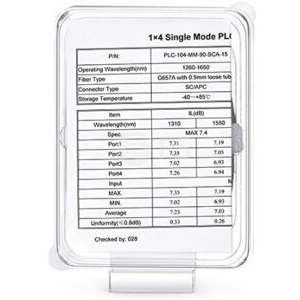
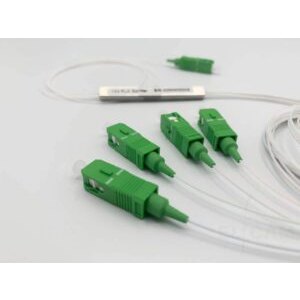

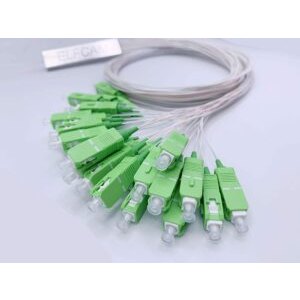
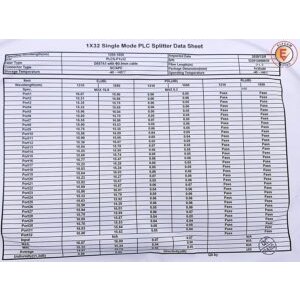
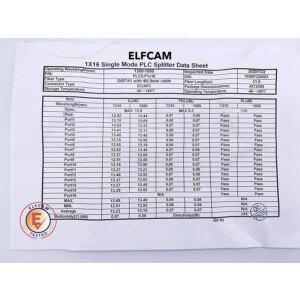

Séparateur Optique de Fibre Monomode de PLC de SC/APC (2-4-8-16-32 Connecteurs) (Ref:2664)
16 comments 1×2 – 1×32 Le prix initial était : 12,99 €.11,99 €Le prix actuel est : 11,99 €. + Ce produit a plusieurs variations. Les options peuvent être choisies sur la page du produit -
Promo !
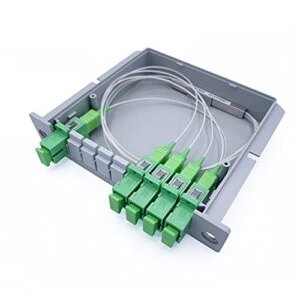
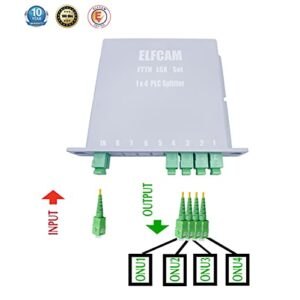
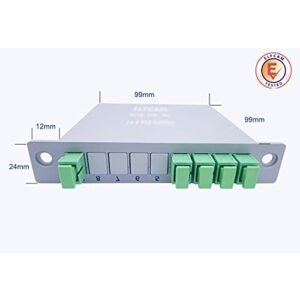
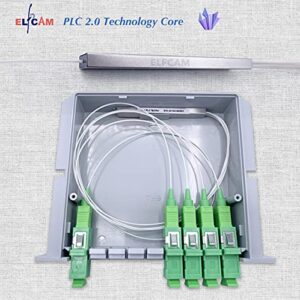
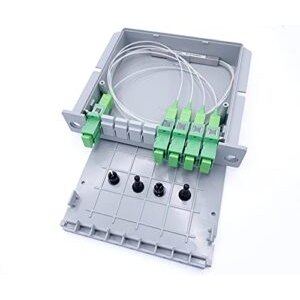
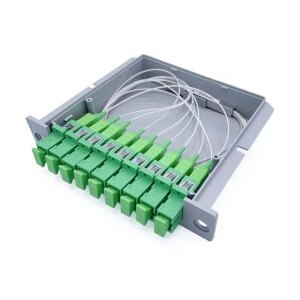
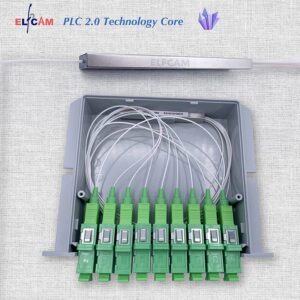
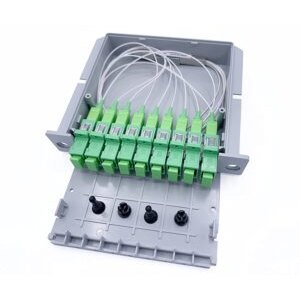
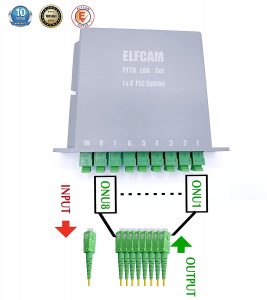
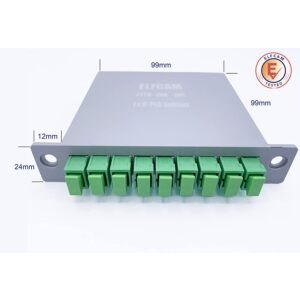
Séparateur de Fibres Optiques (PLC Splitter) Type LGX 1*4,1*8 (Ref:3333)
11 comments 1×4 – 1×8 Le prix initial était : 29,99 €.24,99 €Le prix actuel est : 24,99 €. + Ce produit a plusieurs variations. Les options peuvent être choisies sur la page du produit -
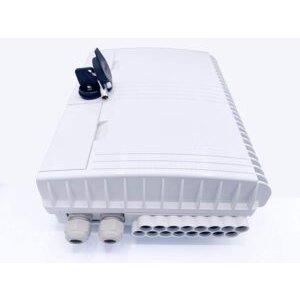
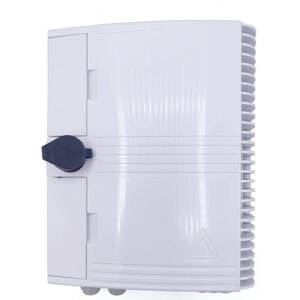
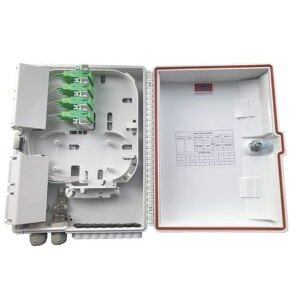
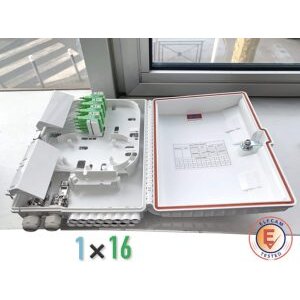
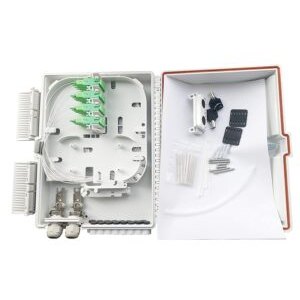
Boitier de distribution FTTH avec PLC type mini(sans bloc) 1*8, 1*16 (Ref:3340)
5 comments 1×8 – 1×16 39,99 € + Ce produit a plusieurs variations. Les options peuvent être choisies sur la page du produit
Évolution des normes : APON, BPON, EPON, GPON, XGS-PON
La technologie PON a évolué en plusieurs générations depuis les années 1990, chaque nouvelle norme multipliant les débits disponibles :
APON — ATM PON (fin des années 1990)
Première normalisation PON, définie par l'ITU-T G.983. Basé sur le protocole ATM (Asynchronous Transfer Mode), il offrait des débits de 155 Mbps ou 622 Mbps. Technologie désormais obsolète, remplacée dans tous les déploiements actifs.
BPON — Broadband PON (début 2000)
Évolution de l'APON, toujours sur base ATM, mais avec des débits montant à 622 Mbps et le support de services additionnels (CATV, accès Ethernet, lignes louées). Lui aussi obsolète, mais encore présent dans quelques infrastructures patrimoniales.
EPON — Ethernet PON (2004, IEEE 802.3ah)
Rupture technologique : abandon de l'ATM au profit de l'Ethernet natif. Débits de 1,25 Gbps symétriques, ratio de split jusqu'à 1:64. Dominant en Asie (Japon, Corée, Chine), encore déployé en Europe dans certains réseaux d'entreprise. Lire notre guide : ONU EPON GEPON — fonctions et types.
GPON — Gigabit PON (2004, ITU-T G.984)
La norme de référence en Europe. Débits de 2,5 Gbps descendant / 1,25 Gbps montant, ratio jusqu'à 1:128, protocole GEM propriétaire. Standard imposé par Orange, SFR et Bouygues pour tous les déploiements FTTH en France. Lire notre guide : Réseaux GPON — architecture et déploiement.
XG-PON / XGS-PON (2010–2016, ITU-T G.987 / G.9807)
La génération 10G du PON. XG-PON : 10G descendant / 2,5G montant (asymétrique). XGS-PON : 10G symétrique — la version qui s'impose dans les nouveaux déploiements. Coexiste avec le GPON sur la même infrastructure grâce à des longueurs d'onde distinctes. Freebox Ultra utilise XGS-PON depuis 2024.
NG-PON2 (2015, ITU-T G.989)
Next Generation PON 2 : combine 4 longueurs d'onde XGS-PON pour atteindre 40 Gbps par fibre. Déploiements en cours dans les datacenters et réseaux mobiles 5G (fronthaul). Encore marginal dans les réseaux d'accès résidentiels.

Tableau comparatif des normes PON
| Norme | Organisme | Année | Débit descendant | Débit montant | Split max. | Statut |
|---|---|---|---|---|---|---|
| APON | ITU-T G.983 | 1998 | 622 Mbps | 155 Mbps | 1:32 | Obsolète |
| BPON | ITU-T G.983.x | 2001 | 622 Mbps | 622 Mbps | 1:32 | Obsolète |
| EPON | IEEE 802.3ah | 2004 | 1,25 Gbps | 1,25 Gbps | 1:64 | Actif (Asie) |
| GPON | ITU-T G.984 | 2004 | 2,5 Gbps | 1,25 Gbps | 1:128 | Dominant (Europe) |
| XG-PON | ITU-T G.987 | 2010 | 10 Gbps | 2,5 Gbps | 1:64 | Déploiement partiel |
| XGS-PON | ITU-T G.9807 | 2016 | 10 Gbps | 10 Gbps | 1:64 | Montée en puissance |
| NG-PON2 | ITU-T G.989 | 2015 | 40 Gbps | 10 Gbps | 1:256 | Datacenter/5G |
Applications du PON : FTTH, entreprise et campus
Le PON a été conçu pour le FTTH résidentiel, mais ses qualités — coût faible, infrastructure passive, longue portée — l'ont étendu à de nombreux autres contextes :
FTTH / FTTB résidentiel — application historique et dominante. Les opérateurs déploient des OLT en NRO et desservent des quartiers entiers via des réseaux GPON passifs. Chaque logement dispose d'un ONT ou d'une box intégrant l'interface GPON. En France : Orange, SFR, Bouygues et Free ont tous migré vers GPON/XGS-PON.
Réseaux d'entreprise et campus — le PON remplace avantageusement les switches d'étage dans les grands bâtiments. Un OLT en baie centrale alimente chaque bureau, salle de réunion et espace commun via des ONU compacts. Résultat : zéro équipement actif à maintenir dans les locaux techniques intermédiaires.
Hôtellerie et résidences services — chaque chambre dispose de son ONU (Internet haut débit, téléphonie, IPTV), avec gestion centralisée depuis le logiciel EMS de l'OLT. La fibre passive sur colonne technique remplace des dizaines de switches d'étage.
Réseaux ruraux et RIP (Réseaux d'Initiative Publique) — la portée de 20 km du GPON permet de desservir des villages et hameaux éloignés depuis un seul NRO sans équipement intermédiaire alimenté.
Fronthaul 5G — les réseaux mobiles 5G utilisent des liaisons PON (XGS-PON, NG-PON2) pour connecter les antennes Radio Access Network (RAN) à la station de base. La bande passante et la faible latence du PON en font un support adapté à ce cas d'usage critique.
-
Promo !
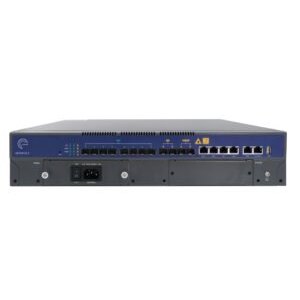
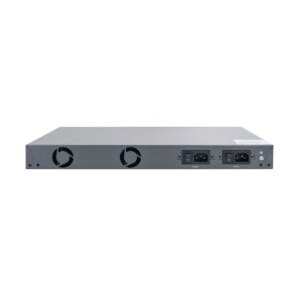

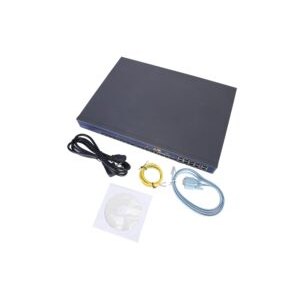
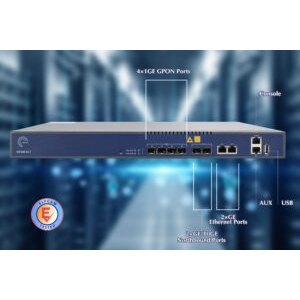
GPON OLT avec 4/8/16 Ports PON, Mettre à Jour Automatique, Gestion Web EMS (8 Ports PON) (Ref:6686)
2 comments Le prix initial était : 799,99 €.699,99 €Le prix actuel est : 699,99 €. + -
Promo !
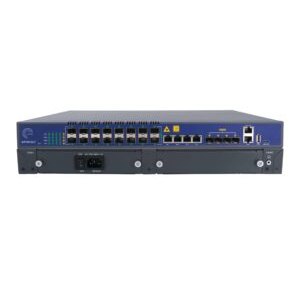
GPON OLT avec 4/8/16 Ports PON, Mettre à Jour Automatique, Gestion Web EMS (16 Ports PON) (Ref:6692)
3 comments Le prix initial était : 1 799,99 €.1 699,99 €Le prix actuel est : 1 699,99 €. + -
Promo !
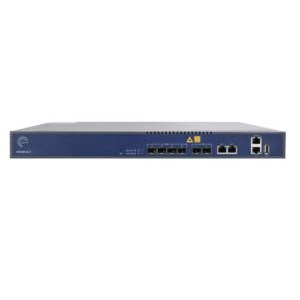
GPON OLT avec 4/8/16 Ports PON, Mettre à Jour Automatique, Gestion Web EMS (4 Ports PON) (Ref:6652)
2 comments Le prix initial était : 1 499,99 €.1 299,99 €Le prix actuel est : 1 299,99 €. +
Comment choisir sa norme PON ?
Le choix d'une norme PON dépend de trois facteurs principaux :
1. Le contexte géographique et opérateur
En France et en Europe, si vous vous raccordez au réseau d'un opérateur public (Orange, SFR, Bouygues, Free), la norme est imposée : GPON ou XGS-PON. Vous n'avez pas le choix — vos équipements ONU doivent être compatibles avec l'OLT de l'opérateur. En Asie, l'EPON reste courant.
2. Les débits requis maintenant et dans 5 ans
Pour des usages résidentiels standards (streaming, gaming, télétravail) : le GPON suffit largement à court terme. Pour des applications professionnelles (cloud intensif, sauvegarde distante, visioconférence multi-site) ou pour futureproofer l'infrastructure : choisissez directement XGS-PON, qui coexiste avec le GPON sur la même fibre.
3. Le nombre d'abonnés et le budget
Un réseau privé (immeuble, campus, hôtel) de moins de 64 abonnés sera bien servi par un OLT GPON 4 ports. Au-delà, un OLT 8 ou 16 ports. Le coût des équipements OLT GPON est aujourd'hui très accessible — à partir de 1 700 € pour un OLT 4 ports capable de desservir 256 abonnés.
Démarrer en GPON et migrer en XGS-PON sans tout changer
Si votre budget initial est limité, déployez en GPON dès aujourd'hui avec des câbles OS2 et des splitteurs PLC standard. Quand vos abonnés auront besoin du 10G, remplacez simplement l'OLT par un modèle COMBO GPON+XGS-PON et changez les ONU au fil des interventions terrain — le câblage passif reste intact. C'est précisément la stratégie de migration adoptée par les opérateurs nationaux.
-
Promo !
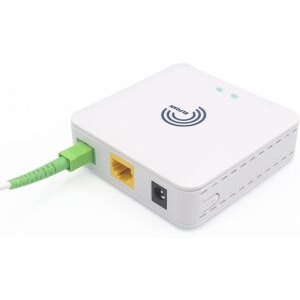
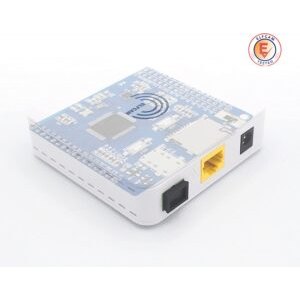
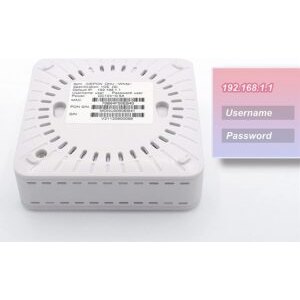
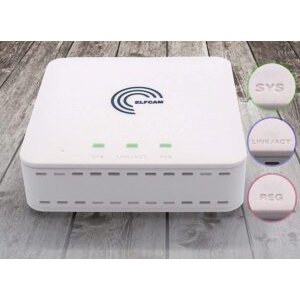
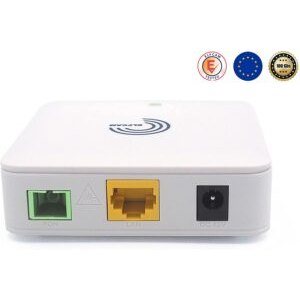
Elfcam – 1GE ONU pour GPON/EPON OLT, avec Port Fibre Optique SC/APC Monomode (Ref:6404)
4 comments Le prix initial était : 59,99 €.49,99 €Le prix actuel est : 49,99 €. + -
Promo !
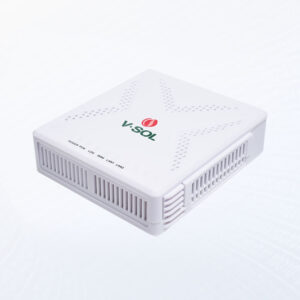
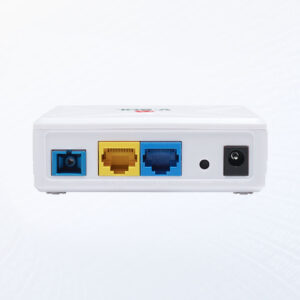
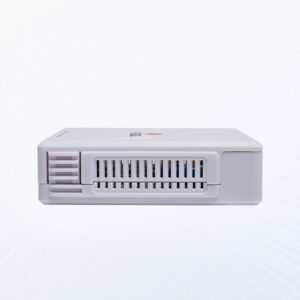
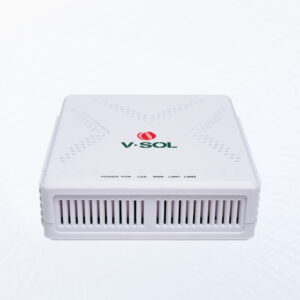
V.SOL – ONU pour GPON/EPON OLT, avec Port Fibre Optique SC/UPC Monomode (1GE + 2,5GbE) (Ref:6965)
2 comments Le prix initial était : 69,99 €.62,99 €Le prix actuel est : 62,99 €. + -
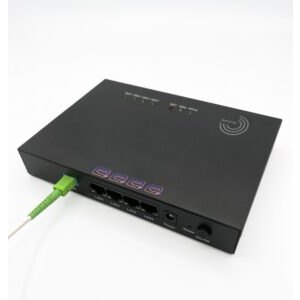
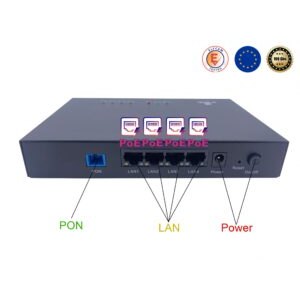
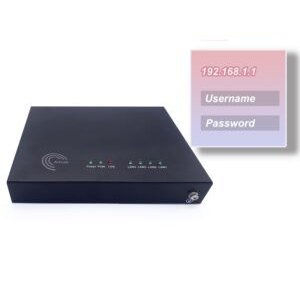
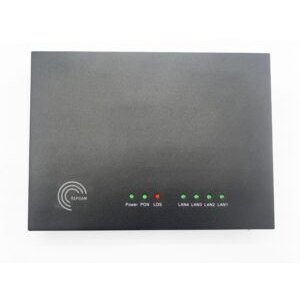
V-SOL 1GE+3FE POE XPON ONU (Ref:7025)
3 comments 99,99 € +