Technical Guide

WiFi 6 vs WiFi 5: throughput, OFDMA, latency — the technical comparison
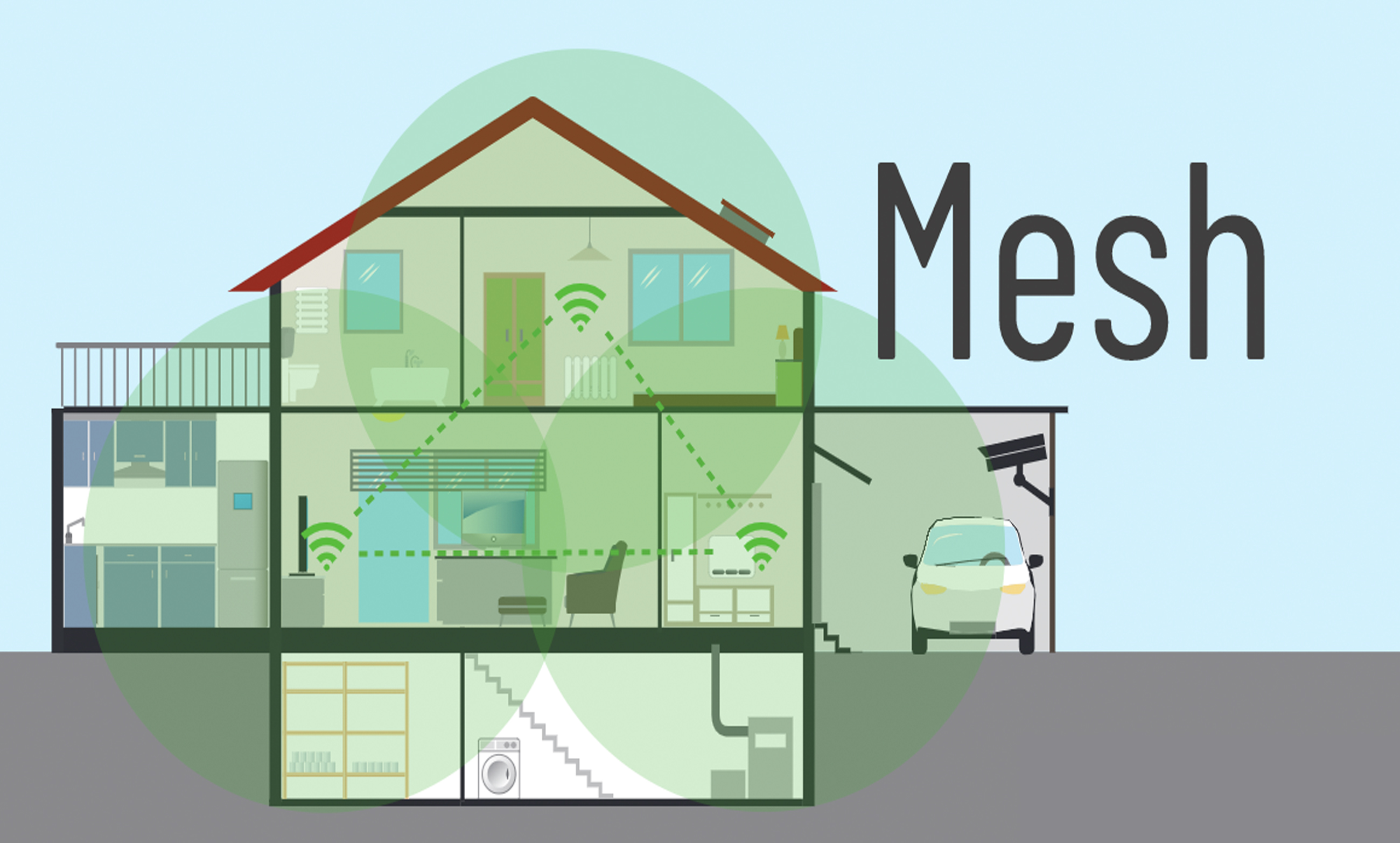
Home mesh WiFi 6 network — WiFi 6 vs WiFi 5 802.11ax vs 802.11ac comparison
WiFi 6 (802.11ax) brings OFDMA, MU-MIMO 8×8 and TWT — architectural changes, not just throughput.

Contents

  1. 802.11ac vs 802.11ax — both standards in brief
  2. Theoretical and real throughput: 3.5 vs 9.6 Gbps
  3. OFDMA: the true revolution of WiFi 6
  4. Improved MU-MIMO: 4 streams to 8 streams
  5. BSS Coloring and TWT: interference and battery
  6. WiFi 6E and the 6 GHz band
  7. Should you migrate in 2026?
  8. FAQ

You have a WiFi 5 router that "works fine," but your network slows down as soon as multiple devices connect simultaneously. Your 4K box lags during video calls, your IoT devices saturate the channel, your phone struggles at the edge of the room. The problem isn't necessarily throughput — it's the architecture.

WiFi 6 (802.11ax) isn't WiFi 5 (802.11ac) with a higher number. It's a change in radio channel access method, designed for dense networks. This guide explains concretely what changes, what you really gain, and when the upgrade is worth it.

WiFi 6 is designed for 100 devices on a network. WiFi 5 was designed for 10. That's the fundamental difference.

802.11ac vs 802.11ax — both standards in brief

WiFi 5 (IEEE 802.11ac) was released in 2013 (Wave 1) then 2016 (Wave 2). It operates only on the 5 GHz band and introduced downlink MU-MIMO and 160 MHz channels. It's the standard still equipping the majority of French internet boxes and devices sold between 2016 and 2021.

WiFi 6 (IEEE 802.11ax) was finalized in 2021. It operates on the 2.4 GHz and 5 GHz bands simultaneously — WiFi 6E adds the 6 GHz band. It replaces OFDM with OFDMA, improves MU-MIMO (uplink included), and introduces two mechanisms absent from WiFi 5: BSS Coloring and TWT.

Criterion WiFi 5 (802.11ac) WiFi 6 (802.11ax)
IEEE standard802.11ac802.11ax
Frequency bands5 GHz only2.4 GHz + 5 GHz (6E: +6 GHz)
Max theoretical throughput3.5 Gbps (Wave 2)9.6 Gbps
Max modulation256-QAM1024-QAM
Channel accessOFDM (one device at a time)OFDMA (multiple devices simultaneously)
MU-MIMODL only, 4 streams maxDL + UL, 8 streams max
BSS ColoringNoYes
TWT (power saving)NoYes
Spectral efficiencyReference+37% approx.
Latency in dense networksHigh under loadReduced by 75% (Wi-Fi Alliance)
Max channel160 MHz160 MHz (same, gain via OFDMA)

Theoretical and real throughput: 3.5 vs 9.6 Gbps

The "9.6 Gbps" figure for WiFi 6 is calculated for an ideal configuration: 8 spatial streams × 1024-QAM × 160 MHz channel. In practice, no consumer router deploys all 8 streams simultaneously. High-end WiFi 6 routers achieve 4 streams (2 × 2.4 GHz + 2 × 5 GHz), or about 4–5 Gbps of aggregated capacity.

What matters more than peak throughput is the real throughput per device under load. On WiFi 5, when 10 devices connect, they compete for the channel via OFDM: only one speaks at a time, the others wait. On WiFi 6, OFDMA lets multiple devices transmit simultaneously on distinct sub-channels — per-device throughput stays stable even when the network is saturated.

What you'll observe in practice

On a network of 5–10 light devices, WiFi 6 brings 30–40% additional throughput vs WiFi 5. On a network of 30+ devices (open space, dense apartment, meeting room), the gain can reach 200–300% thanks to OFDMA — not because WiFi 6 is "faster," but because it manages contention better.
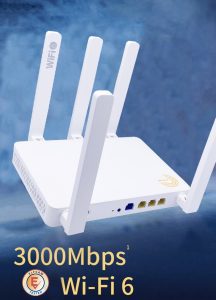
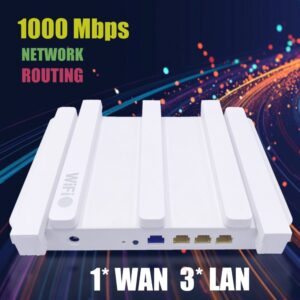
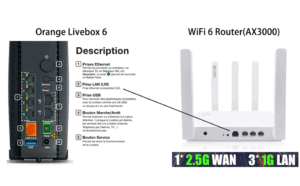
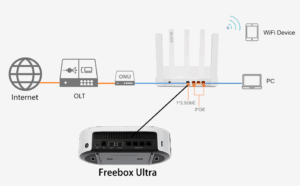
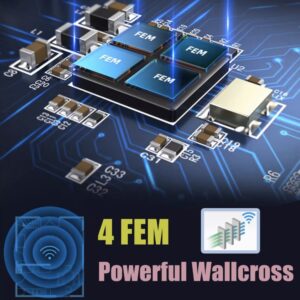
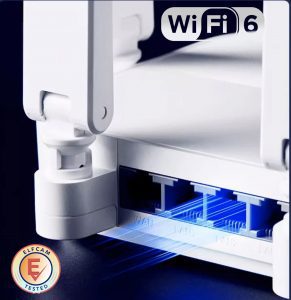
Routeur WiFi 6 Mesh AX3000 2,5Gb (AX3000), Ethernet Port WAN 2,5Gb RJ45, Double-Bande WiFi 6 Mesh Routeur, Jusqu’à 3…Routeur WiFi 6 Mesh AX3000 2,5Gb (AX3000), Ethernet Port WAN 2,5Gb RJ45, Double-Bande WiFi 6 Mesh Routeur, Jusqu’à 3…Routeur WiFi 6 Mesh AX3000 2,5Gb (AX3000), Ethernet Port WAN 2,5Gb RJ45, Double-Bande WiFi 6 Mesh Routeur, Jusqu’à 3…Routeur WiFi 6 Mesh AX3000 2,5Gb (AX3000), Ethernet Port WAN 2,5Gb RJ45, Double-Bande WiFi 6 Mesh Routeur, Jusqu’à 3…Routeur WiFi 6 Mesh AX3000 2,5Gb (AX3000), Ethernet Port WAN 2,5Gb RJ45, Double-Bande WiFi 6 Mesh Routeur, Jusqu’à 3…Routeur WiFi 6 Mesh AX3000 2,5Gb (AX3000), Ethernet Port WAN 2,5Gb RJ45, Double-Bande WiFi 6 Mesh Routeur, Jusqu’à 3…Routeur WiFi 6 Mesh AX3000 2,5Gb (AX3000), Ethernet Port WAN 2,5Gb RJ45, Double-Bande WiFi 6 Mesh Routeur, Jusqu’à 3…Routeur WiFi 6 Mesh AX3000 2,5Gb (AX3000), Ethernet Port WAN 2,5Gb RJ45, Double-Bande WiFi 6 Mesh Routeur, Jusqu’à 3…Routeur WiFi 6 Mesh AX3000 2,5Gb (AX3000), Ethernet Port WAN 2,5Gb RJ45, Double-Bande WiFi 6 Mesh Routeur, Jusqu’à 3…
Routeur WiFi 6 Mesh AX3000 2,5Gb (AX3000), Ethernet Port WAN 2,5Gb RJ45, Double-Bande WiFi 6 Mesh Routeur, Jusqu'à 3000 Mbits/s, Idéal pour Rallonge Votre Freebox Ultra et Orange Livebox 6 (Réf: 17043)
ELFCAM · Réf 17043
Le prix initial était : 79,99 €.Le prix actuel est : 54,99 €.
7 ventes⚡ Livraison Express
★★★★½ (5)
Lot :
head2
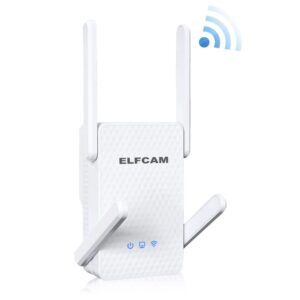
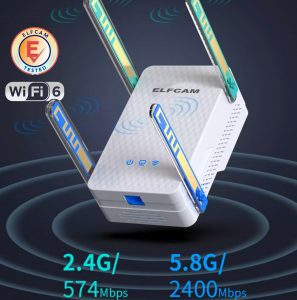
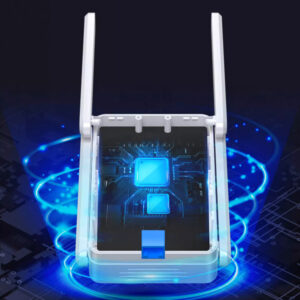
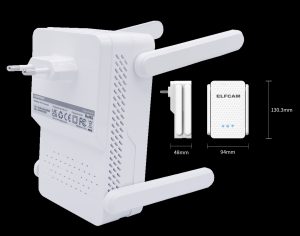
WiFi 6 Répéteur WiFi Puissant 3000Mbps, Amplificateur WiFi Puissant sans Fil Double Bande 5GHz & 2.4GHz WiFi Boosterm, Compatible avec Toutes Les Box Internet (Ref: 17042)
ELFCAM · Réf 17042
Le prix initial était : 69,99 €.Le prix actuel est : 64,99 €.
3 ventes⚡ Livraison Express
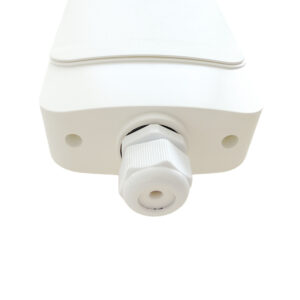
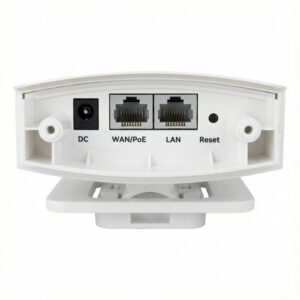
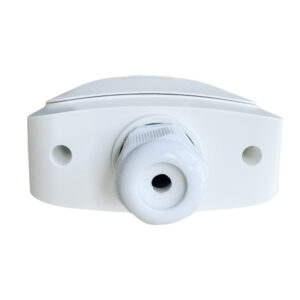
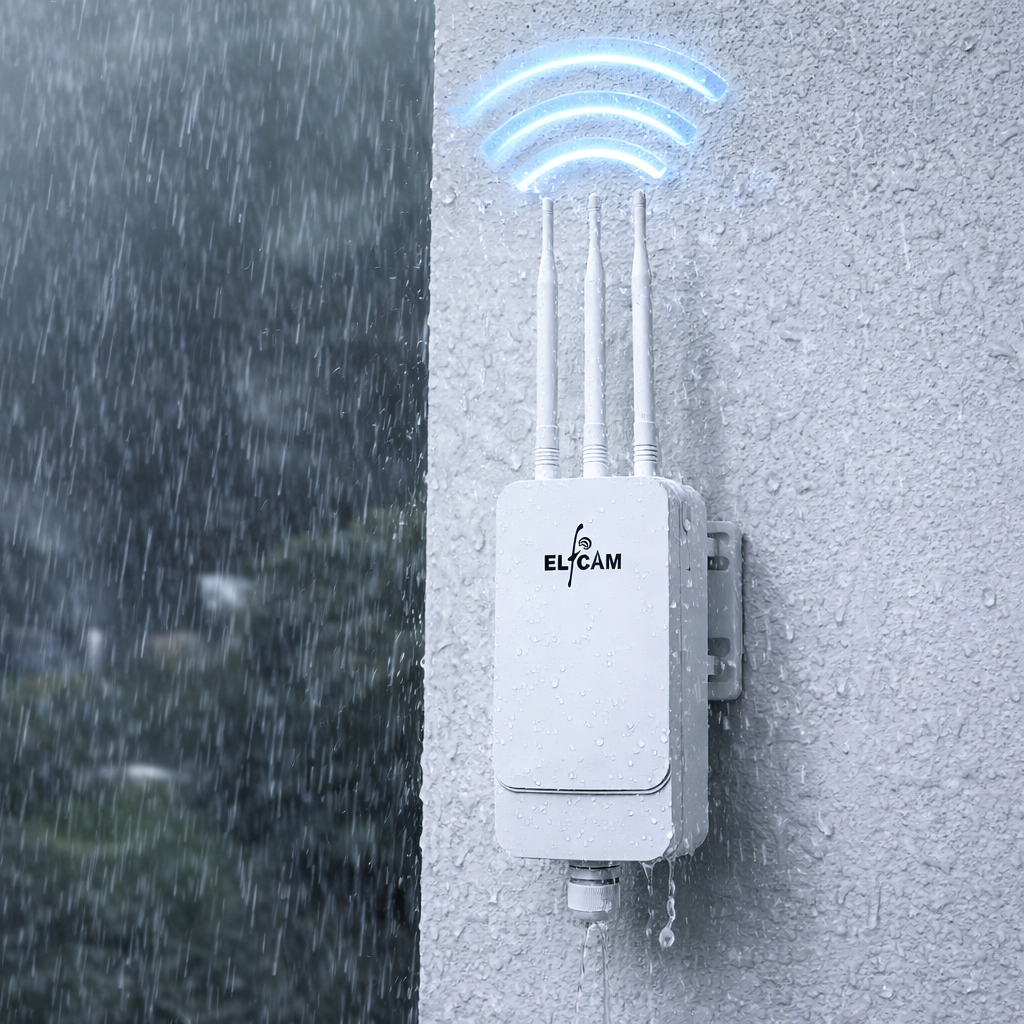
Elfcam - WiFi 6 Extérieur AX3000 Point d'accès extérieur - WiFi Dual Band 2.4G/5G 3000Mbps ,1 Port Gigabit WAN/LAN, Ét...Elfcam – WiFi 6 Extérieur AX3000 Point d’accès extérieur – WiFi Dual Band 2.4G/5G 3000Mbps ,1 Port Gigab…Elfcam – WiFi 6 Extérieur AX3000 Point d’accès extérieur – WiFi Dual Band 2.4G/5G 3000Mbps ,1 Port Gigab…Elfcam – WiFi 6 Extérieur AX3000 Point d’accès extérieur – WiFi Dual Band 2.4G/5G 3000Mbps ,1 Port Gigab…Elfcam – WiFi 6 Extérieur AX3000 Point d’accès extérieur – WiFi Dual Band 2.4G/5G 3000Mbps ,1 Port Gigab…Elfcam – WiFi 6 Extérieur AX3000 Point d’accès extérieur – WiFi Dual Band 2.4G/5G 3000Mbps ,1 Port Gigab…Elfcam – WiFi 6 Extérieur AX3000 Point d’accès extérieur – WiFi Dual Band 2.4G/5G 3000Mbps ,1 Port Gigab…
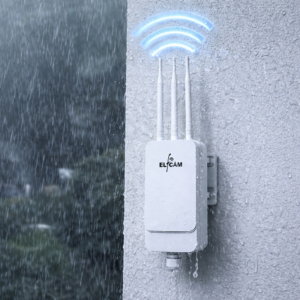
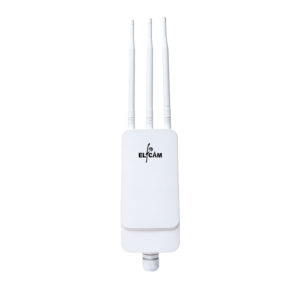
Elfcam - WiFi 6 Extérieur AX3000 Point d'accès extérieur - WiFi Dual Band 2.4G/5G 3000Mbps ,1 Port Gigabit WAN/LAN, Étanche IP67, Alimentation PoE+, Fonction Mesh, Pour Jardin, Yard, Caméra et Zones Rurales
ELFCAM · Réf 29017
Le prix initial était : 408,90 €.Le prix actuel est : 399,99 €.
⚡ Livraison Express
★★★★★ (1)

OFDMA: the true revolution of WiFi 6

OFDMA (Orthogonal Frequency Division Multiple Access) is the most important change between the two generations. To understand why, let's recall how WiFi 5 works.

On WiFi 5, a radio channel (e.g. 80 MHz) is allocated entirely to a single device at a time. If your smartphone sends a 2 KB email, it monopolizes the channel for a few milliseconds — during which your smart TV, your bulbs and your tablet wait. The more devices there are, the longer the queue gets, the more latency climbs.

On WiFi 6, this same channel is divided into Resource Units (RU) — smaller sub-channels. The access point distributes them simultaneously to multiple devices based on their needs. The 2 KB email gets a small RU, the 4K video stream gets a large RU — everything happens in parallel on the same frame.
WiFi 6 OFDMA diagram — Resource Unit distribution across devices simultaneously
OFDMA divides the channel into Resource Units (RU) allocated simultaneously to multiple devices — unlike OFDM (WiFi 5) which allocates the whole channel to a single device.

The concrete result: average latency under load drops by 75% according to the Wi-Fi Alliance. On an office network with 50 active devices, the difference between a smooth video call and dropouts often plays out here.

Improved MU-MIMO: from 4 streams to 8 streams, and uplink included

MU-MIMO (Multi-User Multiple Input Multiple Output) already existed in WiFi 5 Wave 2 — but only for downlink (DL), and limited to 4 simultaneous streams. WiFi 6 extends it to uplink (UL) and doubles capacity to 8 simultaneous streams.

Concretely, a WiFi 6 router can talk simultaneously to 8 different devices in both directions. This is particularly useful for video calls, online gaming and cloud backups — all situations where upload is as critical as download.

Elfcam equipment for deploying WiFi 6

BSS Coloring and TWT: interference and battery life

Two mechanisms specific to WiFi 6 often go unnoticed but have a real impact in dense environments.

BSS Coloring — reducing interference between neighboring networks

In an apartment building or open space, dozens of WiFi networks overlap on the same channels. On WiFi 5, a device that detects a signal from a neighboring network waits before transmitting — even if that signal isn't meant for it. This is the co-channel interference problem.

BSS Coloring adds a "color marker" (an identifier) in each frame. A WiFi 6 device that receives a frame colored differently from its network ignores it and transmits anyway. Result: fewer needless waits, better channel utilization in high-density network environments.

TWT — power saving for IoT devices

TWT (Target Wake Time) lets the access point and devices negotiate precise wake windows. A connected bulb that only needs to communicate once per second can stay in deep sleep between exchanges instead of constantly scanning the channel.

The impact is twofold: significantly improved IoT device battery life (up to 7× according to Wi-Fi Alliance), and fewer "active" devices simultaneously on the channel, which further relieves contention.
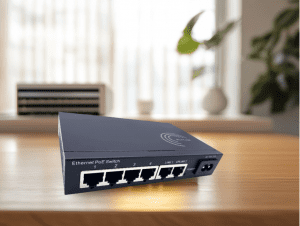
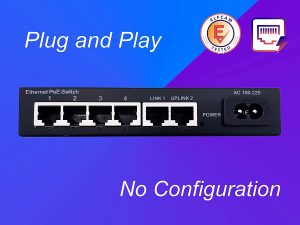
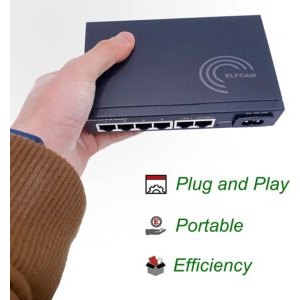
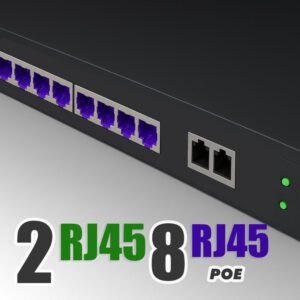
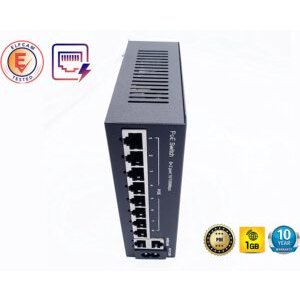
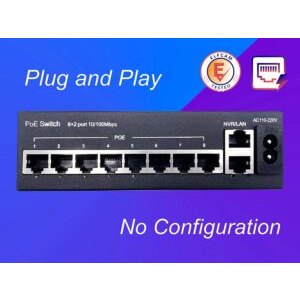
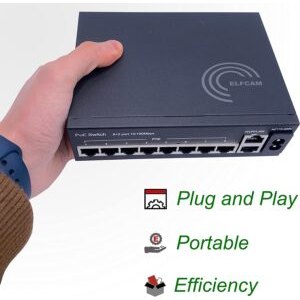
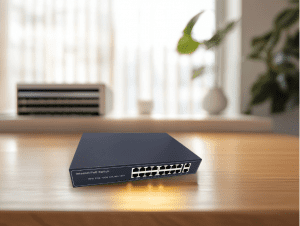
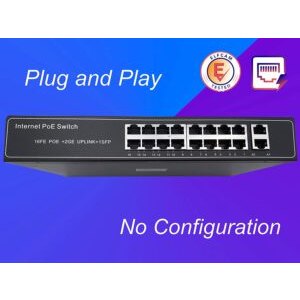
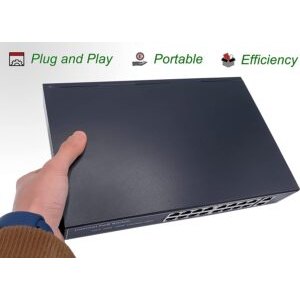
PoE Ethernet Switch avec 2 Ports Uplink Gigabit Ethernet 10/100/1000Mbps, Plug &Play Non Géré, Métal Robuste (4 Ports P...PoE Ethernet Switch avec 2 Ports Uplink Gigabit Ethernet 10/100/1000Mbps, Plug &Play Non Géré, Métal Robuste (4 Ports…PoE Ethernet Switch avec 2 Ports Uplink Gigabit Ethernet 10/100/1000Mbps, Plug &Play Non Géré, Métal Robuste (4 Ports…PoE Ethernet Switch avec 2 Ports Uplink Gigabit Ethernet 10/100/1000Mbps, Plug &Play Non Géré, Métal Robuste (4 Ports…
PoE Ethernet Switch avec 2 Ports Uplink Gigabit Ethernet 10/100/1000Mbps, Plug &Play Non Géré, Métal Robuste (4 Ports PoE) Réf:7808
ELFCAM · Réf 7808
Le prix initial était : 49,99 €.Le prix actuel est : 44,99 €.
3 ventes⚡ Livraison Express
★★★★½ (4)
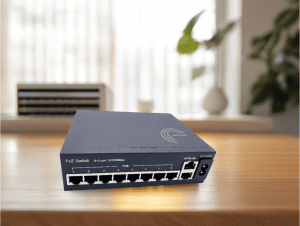
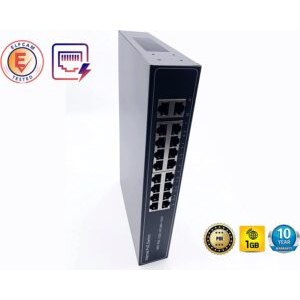
PoE Ethernet Switch avec 2 Ports Uplink Gigabit Ethernet 10/100/1000 Mbps, Plug & Play Non Géré, Métal Robuste (8 Ports...PoE Ethernet Switch avec 2 Ports Uplink Gigabit Ethernet 10/100/1000 Mbps, Plug & Play Non Géré, Métal Robuste (8 Port…PoE Ethernet Switch avec 2 Ports Uplink Gigabit Ethernet 10/100/1000 Mbps, Plug & Play Non Géré, Métal Robuste (8 Port…PoE Ethernet Switch avec 2 Ports Uplink Gigabit Ethernet 10/100/1000 Mbps, Plug & Play Non Géré, Métal Robuste (8 Port…PoE Ethernet Switch avec 2 Ports Uplink Gigabit Ethernet 10/100/1000 Mbps, Plug & Play Non Géré, Métal Robuste (8 Port…
PoE Ethernet Switch avec 2 Ports Uplink Gigabit Ethernet 10/100/1000 Mbps, Plug & Play Non Géré, Métal Robuste (8 Ports PoE)(REF:7813)
ELFCAM · Réf 7813
Le prix initial était : 69,99 €.Le prix actuel est : 62,99 €.
6 ventes⚡ Livraison Express
★★★★★ (4)
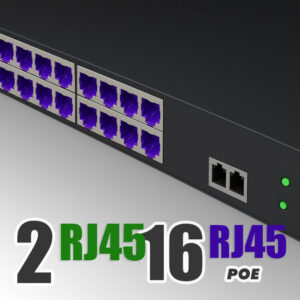
PoE Ethernet Switch avec 2 Ports Uplink Gigabit Ethernet 10/100/1000Mbps, Plug & Play Non Géré, Métal Robuste (16 Ports...PoE Ethernet Switch avec 2 Ports Uplink Gigabit Ethernet 10/100/1000Mbps, Plug & Play Non Géré, Métal Robuste (16 Port…PoE Ethernet Switch avec 2 Ports Uplink Gigabit Ethernet 10/100/1000Mbps, Plug & Play Non Géré, Métal Robuste (16 Port…PoE Ethernet Switch avec 2 Ports Uplink Gigabit Ethernet 10/100/1000Mbps, Plug & Play Non Géré, Métal Robuste (16 Port…PoE Ethernet Switch avec 2 Ports Uplink Gigabit Ethernet 10/100/1000Mbps, Plug & Play Non Géré, Métal Robuste (16 Port…
PoE Ethernet Switch avec 2 Ports Uplink Gigabit Ethernet 10/100/1000Mbps, Plug & Play Non Géré, Métal Robuste (16 Ports PoE) (Ref: 7818)
ELFCAM · Réf 7818
Le prix initial était : 129,99 €.Le prix actuel est : 109,99 €.
3 ventes⚡ Livraison Express
★★★★★ (2)

WiFi 6E and the 6 GHz band: the logical extension

WiFi 6E is an extension of WiFi 6 that adds the 6 GHz band (5.925–7.125 GHz), available in France since 2021 on certain certified devices. This band offers up to 1200 MHz of additional spectrum — that's 7 non-overlapping 160 MHz channels, versus 2 in the 5 GHz band.

The 6 GHz band is currently uncrowded: few older devices use it, no microwaves or Bluetooth devices on this range. It's the ideal space for very low-latency applications: gaming, VR/AR, 8K video streams. The range is slightly lower than the 5 GHz band (higher absorption), making it a complementary technology rather than a replacement.

WiFi 6E on 6 GHz is like opening a new empty highway next to a saturated ring road. The speed isn't higher, but traffic flows without congestion.

And WiFi 7 (802.11be)?

WiFi 7 standardizes Multi-Link Operation (MLO) — a device can simultaneously use multiple bands (2.4 + 5 + 6 GHz) to combine throughputs and automatically switch in case of interference. Theoretical throughput: 46 Gbps. The WiFi 7 Intel BE200 card available at Elfcam is one of the first to support MLO on PC.

Should you migrate to WiFi 6 in 2026?

The answer depends on your context, not the number on the box.

Migration recommended if: you have more than 15 devices connected simultaneously, your network slows in the evening or when multiple users are present, you're deploying cameras or IoT sensors in large numbers, or you're in an apartment building with many neighboring networks on the same channels.

Migration optional if: you have fewer than 10 devices, your current WiFi 5 box satisfies you, and your internet connection is limited to 1 Gbps or less — in that case, your ISP latency will be the bottleneck well before your WiFi.

One important point: WiFi 6 is backward compatible with all WiFi 4 and WiFi 5 devices. You don't need to replace your terminals to benefit from a WiFi 6 router — older devices continue to work, but don't use OFDMA or TWT until they support 802.11ax.

Complete your WiFi 6 network

FAQ — WiFi 6 vs WiFi 5

1Is WiFi 6 really 3 times faster than WiFi 5?
In theory yes — 9.6 Gbps vs 3.5 Gbps. In practice, the raw throughput gain on a single device is 30–40% in a typical home. The 3× and more gain is only observable in dense environments (30+ simultaneous devices) where OFDMA reduces contention. Don't choose WiFi 6 for peak throughput — choose it for stability under load.
2Will my WiFi 5 devices work with a WiFi 6 router?
Yes. WiFi 6 is fully backward compatible with WiFi 5, WiFi 4 and even WiFi 3. Your current devices will connect without modification. They won't benefit from OFDMA or TWT, but their performance won't be degraded. The migration can therefore be progressive — you replace the router first, then the terminals through natural renewal.
3What's the difference between WiFi 6 and WiFi 6E?
WiFi 6 operates on the 2.4 GHz and 5 GHz bands. WiFi 6E adds the 6 GHz band (5.925–7.125 GHz), available in France since 2021. The 6 GHz band offers more non-overlapping channels and is less congested, but its range is slightly lower. Both use the same 802.11ax protocol — the difference is only the availability of 6 GHz spectrum.
4Does my phone support WiFi 6?
Most high-end smartphones launched from 2020 onwards support WiFi 6 (iPhone 11 and later, Samsung Galaxy S10+, Pixel 4 and later). Mid-range devices began integrating WiFi 6 from 2021–2022. To check, look for "802.11ax" in your device's technical specifications. PCs can also be upgraded via a PCIe WiFi card if a slot is available.
5Does WiFi 6 improve range compared to WiFi 5?
Marginally. Range depends above all on frequency (2.4 GHz > 5 GHz for wall penetration) and transmit power — two parameters similar between WiFi 5 and WiFi 6. What changes is that WiFi 6 uses the 2.4 GHz band better thanks to OFDMA, which can improve long-distance connections. To extend coverage, a mesh system remains the most effective solution, regardless of WiFi generation.
6Does OFDMA work on all WiFi 6 devices?
OFDMA requires both ends (router AND client device) to support WiFi 6. If you have a WiFi 6 router and a WiFi 5 phone, the connection will fall back to 802.11ac without OFDMA. OFDMA benefits only appear gradually, as you renew your device fleet to 802.11ax.
7Should I wait for WiFi 7 to invest?
WiFi 7 (802.11be) has been standardized since 2024, but consumer equipment remains expensive and few terminals support it in 2026. If you have an aging WiFi 4 or 5 network, moving to WiFi 6 now is worthwhile: prices have dropped, gains are concrete on dense networks, and WiFi 6 will remain relevant for at least 5 years. WiFi 7 is interesting if you already have 6 GHz hardware or extreme throughput needs (10+ Gbps).
8Are Elfcam WiFi 6 products available in stock in France?
Yes. The Mesh WiFi 6 Router AX3000, the WiFi 6 repeater and the IP67 outdoor access point are in stock in France, with shipping within 24–48 business hours. For multi-access-point deployments requiring a PoE switch, Elfcam PoE switches are also immediately available.
E

Elfcam Technical Team

Experts in network infrastructure and fiber optics since 2018. More than 40,000 installations supported in France and Europe. Our technical guides are written by network engineers active in the field.

EN / EUR France
Select the country/region, the language, and the currency in which you want to shop.
Livrer en
France
Sélectionnez votre adresse de livraison pour estimer les frais et le délai d'expédition.
Panier
Mon Panier
Chargement...