ONU EPON GEPON: Functions, Types and Differences with GPON
Contents
EPON (Ethernet Passive Optical Network), also called GEPON (Gigabit EPON), is one of the two major passive optical network technologies deployed on a large scale worldwide. While GPON dominates in Europe, EPON is the reference standard in Asia — Japan, South Korea, China — and remains present in many industrial and enterprise installations. Understanding its specifics and the different types of ONUs available is essential for any network integrator or fiber technician working on multi-technology deployments.
What is EPON / GEPON?
EPON is defined by the IEEE 802.3ah standard (published in 2004). Unlike GPON, which encapsulates data in a proprietary protocol (GEM), EPON natively transports 802.3 Ethernet frames — which simplifies integration into existing IP networks and reduces hardware complexity.
The term GEPON is simply the "Gigabit" version of EPON and refers to the same IEEE 802.3ah standard. The two names are used interchangeably depending on the manufacturer and region — Japanese equipment makers prefer "GEPON", while Chinese and American manufacturers favor "EPON".
Main characteristics:
- Throughput: 1.25 Gbps symmetrical (same downstream and upstream rate)
- Wavelengths: 1490 nm downstream / 1310 nm upstream (identical to GPON)
- Maximum range: 20 km between the OLT and the farthest ONU
- Split ratio: typically 1:16 to 1:32 (standard: up to 1:64)
- Protocol: native 802.3 Ethernet, MPCP encapsulation (Multi-Point Control Protocol)
EPON transports Ethernet frames without protocol conversion — which makes it naturally compatible with existing IP/Ethernet infrastructures and simplifies network management.
Architecture of an EPON network: OLT and ONU
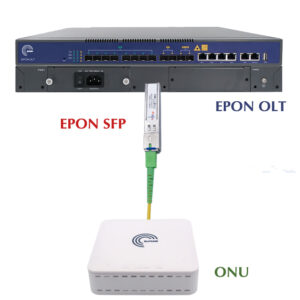
An EPON network is based on the same point-to-multipoint architecture as GPON, with two key active devices:
The EPON OLT (Optical Line Terminal) is installed at the network head — in the operator's technical room or in a company's server room. It handles TDMA time synchronization, bandwidth allocation (DBA) and ONU authentication via their MAC address or LLID number. Each PON port on an EPON OLT can serve up to 32 or 64 ONUs.
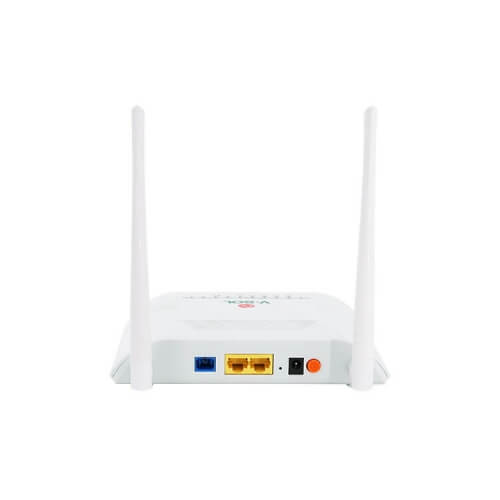
The EPON ONU (Optical Network Unit) is installed on the subscriber side. It receives the optical signal from the fiber via an SC/APC connector, converts it to an Ethernet signal and distributes services to end equipment (box, switch, IP cameras, WiFi access points). It is the equivalent of the ONT in GPON architecture.
Between the two, the passive distribution network uses PLC optical splitters (1:4, 1:8, 1:16) to divide the signal without any powered equipment. The transport fiber, splitters and drop cables remain passive throughout their entire lifespan — typically 25 to 30 years.
Elfcam EPON OLT — 4, 8 and 16 PON ports
Elfcam EPON OLTs support up to 64 ONUs per port, cloud EMS management and dynamic RIP/OSPF routing. Available in 4, 8 and 16 PON ports for deployments of any size.
-
Sale!
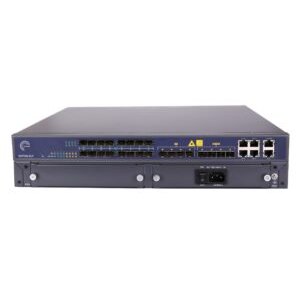
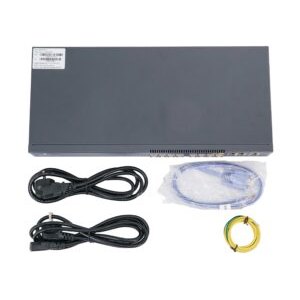
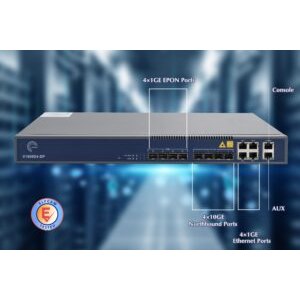
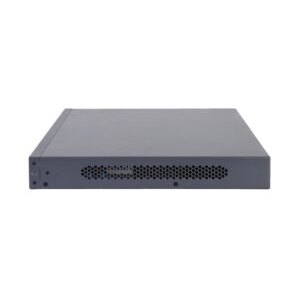
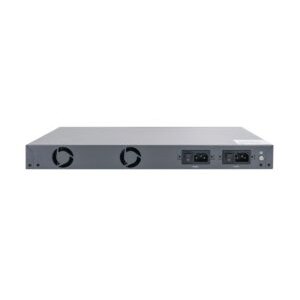
EPON OLT with 4/8/16 PON Ports, Automatic Update, EMS Web Management (16 PON Ports) (Ref:6695)
3 comments Original price was: 2 549,99 €.2 219,99 €Current price is: 2 219,99 €. + -
Sale!
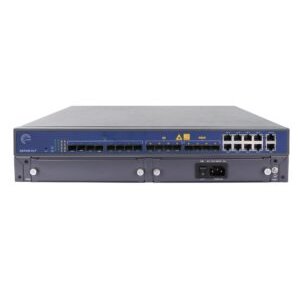
EPON OLT with 4/8/16 PON Ports, Automatic Update, EMS Web Management (8 PON Ports) (Ref:6693)
3 comments Original price was: 2 199,99 €.1 819,99 €Current price is: 1 819,99 €. + -
Sale!
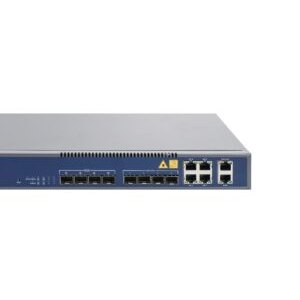
EPON OLT with 4/8/16 PON Ports, Automatic Update, EMS Web Management (4 PON Ports) (Ref:6665)
4 comments Original price was: 1 699,99 €.1 369,99 €Current price is: 1 369,99 €. +
EPON ONU types: WiFi, PoE, CATV, Reverse PoE
Unlike GPON ONUs standardized by Orange for residential FTTH, EPON ONUs come in many functional variants adapted to specific use cases:
Basic EPON ONU (1GE / 1GE+FE) — Ethernet ports only. Ideal for powering an existing router or switch. Compact format, minimal power consumption.
EPON WiFi ONU — integrates a 2.4 GHz WiFi module (802.11b/g/n) or dual-band (2.4 + 5 GHz). Allows deploying fiber and WiFi in a single device without an additional switch or AP. Used in residential and hotel deployments.
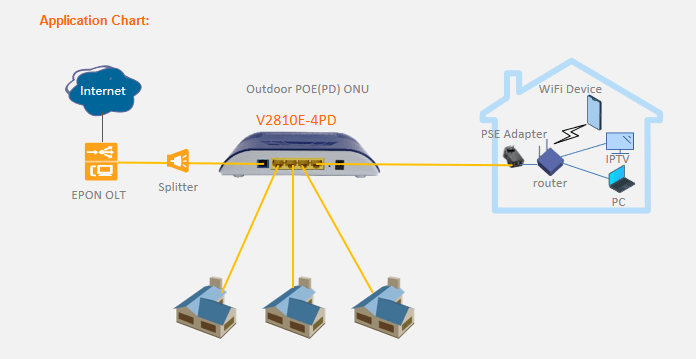
EPON PoE ONU — equipped with 802.3af/at Ethernet ports allowing powering of active equipment (IP cameras, WiFi APs, SIP phones) directly from the ONU. Reduces electrical cabling on surveillance installations and access networks.
EPON CATV ONU — integrates an RF coaxial port for cable television distribution alongside IP services. Used in mixed installations where the existing coaxial network is retained.
EPON Reverse PoE ONU — special configuration where the ONU is powered by the equipment it serves (via PoE) rather than by its own mains power supply. Allows installation in areas without access to AC power — typically on lighting poles, telephone poles or outdoor equipment.
-
Sale!
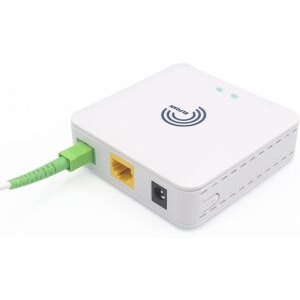
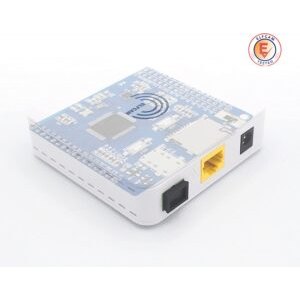
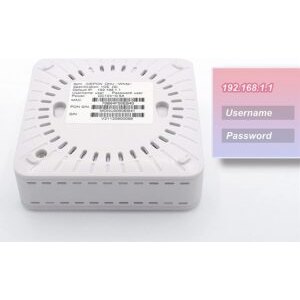
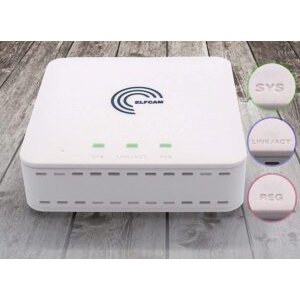
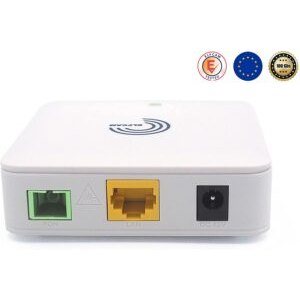
Elfcam – 1GE ONU for GPON/EPON OLT, with SC/APC Single-mode Fiber Optic Port (Ref:6404)
4 comments Original price was: 59,99 €.49,99 €Current price is: 49,99 €. + -
Sale!
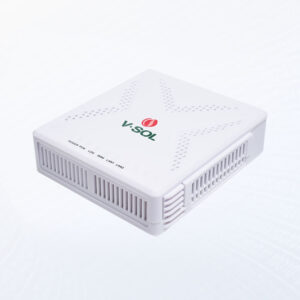
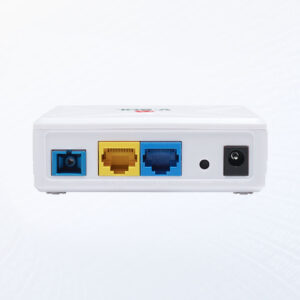
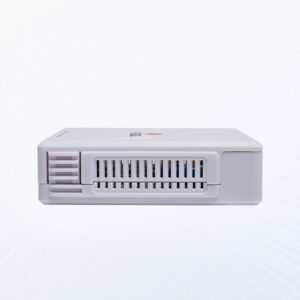
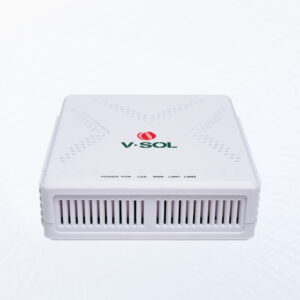
V.SOL – ONU for GPON/EPON OLT, with SC/UPC Single-mode Fiber Optic Port (1GE + 2.5GbE) (Ref:6965)
2 comments Original price was: 69,99 €.62,99 €Current price is: 62,99 €. + -
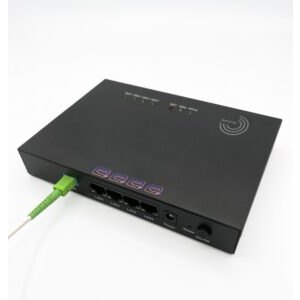
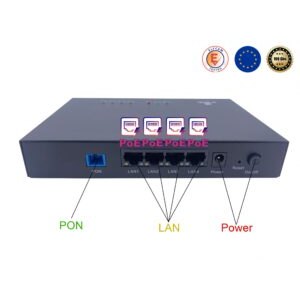
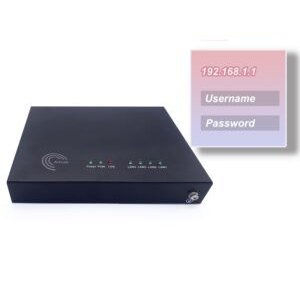
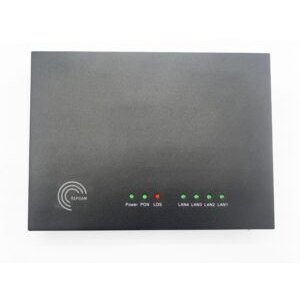
V-SOL 1GE+3FE POE XPON ONU (Ref:7025)
3 comments 99,99 € + -
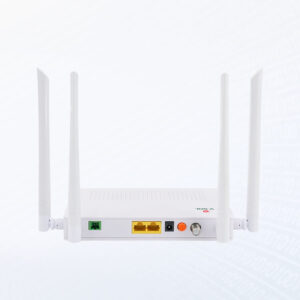
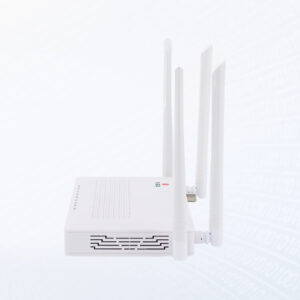
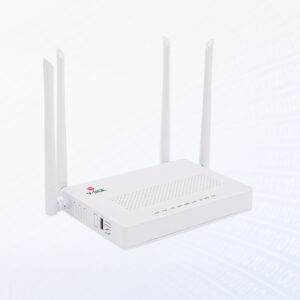

V-SOL 2GE+CATV+USB3.0+WiFi ONU (Ref:7019)
3 comments 89,99 € +
EPON vs GPON: full comparison table
The two standards coexist on the market and are often present in the same equipment catalog. Here are the key differences to know in order to choose the right technology for your project:
| Criterion | EPON / GEPON | GPON |
|---|---|---|
| Standard | IEEE 802.3ah | ITU-T G.984 |
| Downstream rate | 1.25 Gbps | 2.5 Gbps |
| Upstream rate | 1.25 Gbps | 1.25 Gbps |
| Symmetry | Symmetrical | Asymmetrical |
| Max split ratio | 1:64 | 1:128 |
| Transport protocol | Native 802.3 Ethernet | GEM (GPON Encapsulation Method) |
| ONU authentication | MAC address / LLID | GPON serial number / LOID |
| QoS / priorities | Basic (802.1p) | Advanced (T-CONT, DBA) |
| Dominant deployment | Asia (China, Japan, Korea) | Europe, Americas |
| Compatibility | Not compatible with GPON | Not compatible with EPON |
| IP integration complexity | Low (native Ethernet) | Medium (GEM encapsulation) |
| Equipment cost | Slightly lower | Standard European market |
In practice, the choice is often constrained by the OLT already in place. If your customer has an EPON OLT, you must deploy EPON ONUs. If the national operator imposes GPON (Orange France case), no EPON ONU will work on this network. XPON (dual-mode) equipment is the solution when the network technology is not known in advance.
XPON: ONUs compatible with both EPON and GPON
XPON ONUs integrate both EPON (IEEE 802.3ah) and GPON (ITU-T G.984) protocol layers. At startup, the ONU automatically detects the type of OLT to which it is connected and adapts to it without manual configuration.
This flexibility is particularly valuable in three situations:
- Multi-operator deployments — a single ONU SKU for coexisting EPON and GPON networks
- EPON → GPON migration — progressive replacement of the OLT without changing the ONUs at subscribers' premises
- Single stock — simplified logistics for integrators managing multiple network types
XPON ONUs display both certifications in their datasheet and the mention "XPON" or "GEPON/GPON" in their commercial name.
How to choose your EPON ONU?
The right EPON ONU depends mainly on three factors: the services to deliver, the installation environment, and compatibility with the OLT.
Services to deliver:
- Internet only → 1GE or 1GE+FE ONU (simpler, cheaper)
- Internet + WiFi in premises without an AP → integrated WiFi ONU
- Powering IP cameras or APs → PoE ONU (check total available power: 60 W or 120 W depending on model)
- Cable TV on existing coaxial network → CATV ONU
- Outdoor installation without mains → Reverse PoE ONU
Installation environment:
- Indoor technical area (rack, wall enclosure) → standard housing ONU
- Outdoor or industrial zone → ONU with IP65+ protection rating and extended temperature range (-40°C to +70°C)
OLT compatibility: always verify that the ONU is listed as compatible with your OLT model. Elfcam OLTs publish an interoperability compatibility list on the datasheet — V-SOL and Elfcam ONUs are tested and validated at the factory on OLTs of the same range.
Verifying ONU registration on an EPON OLT
On an EPON OLT, ONUs are identified by their MAC address or their LLID number (Logical Link ID). After physical connection, the ONU appears in the "unregistered ONUs" list of the EMS interface. It just needs to be associated with a service profile (Internet, voice, IPTV VLAN) to activate it. The cloud EMS software of Elfcam OLTs enables this provisioning remotely from any browser.
Provisioning an EPON ONU on an OLT
Commissioning an EPON ONU follows a standard 4-step process:
- 1. Physical connection — plug the SC/APC patch cord between the splitter output and the SC/APC port of the ONU. Check connector cleanliness before any handling.
- 2. Automatic detection — the ONU sends a registration signal (MPCP Register Request). The OLT detects it and adds it to the list of ONUs awaiting registration.
- 3. Provisioning — in the EMS interface, associate the ONU's LLID or MAC address with a service profile: Internet VLAN (tagged or untagged), 802.1p priority, bandwidth limit.
- 4. Verification — test connectivity from the ONU (ping gateway) and measure optical levels (received power between -3 and -27 dBm for a compliant installation).
If the ONU does not register, the most frequent causes are: optical loss too high (dirty connector, excessive bend radius), EPON/GPON incompatibility (GPON ONU plugged into EPON OLT), or service profile misconfigured on the OLT side.
-
Sale!
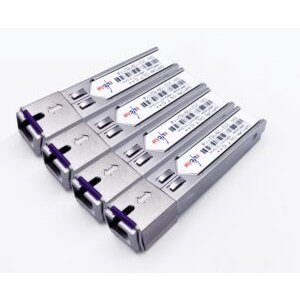
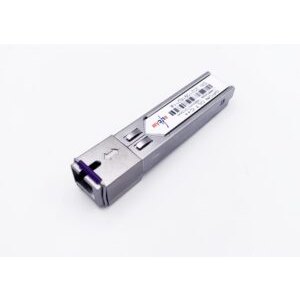
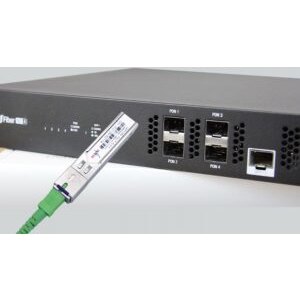
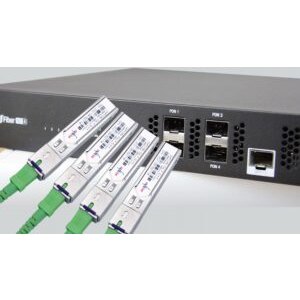
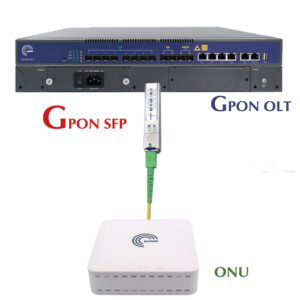
GPON OLT 2.5Gbps SFP Class C++ TX1490nm / RX1310nm 20km Transceiver, 20KM SC/UPC Optical Transceiver (Ref: 6631)
4 comments Lot 1 – Lot 4 Original price was: 79,99 €.71,99 €Current price is: 71,99 €. + This product has multiple variants. The options may be chosen on the product page -
Sale!
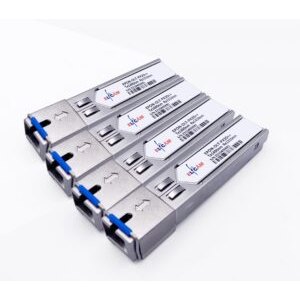
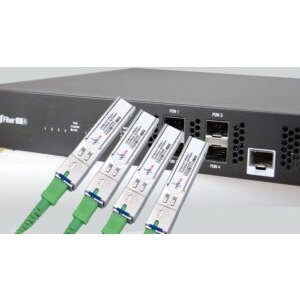
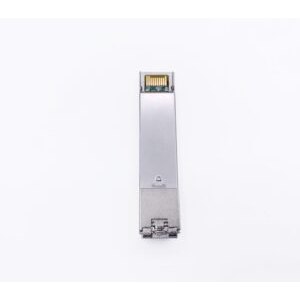
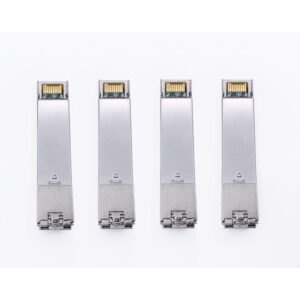
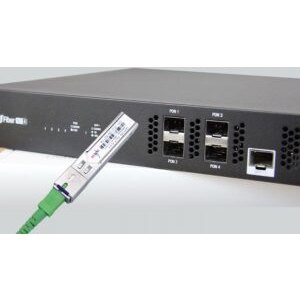
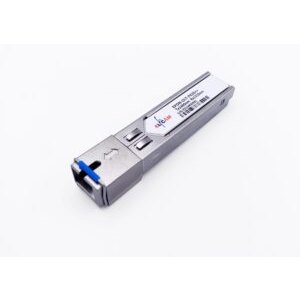
1.25G GPON EPON PX20++ SFP OLT Transceiver, TX1490nm / RX1310nm 20km, SC/UPC Optical Transceiver (Ref:6681)
3 comments Lot 1 – Lot 4 Original price was: 79,99 €.71,99 €Current price is: 71,99 €. + This product has multiple variants. The options may be chosen on the product page